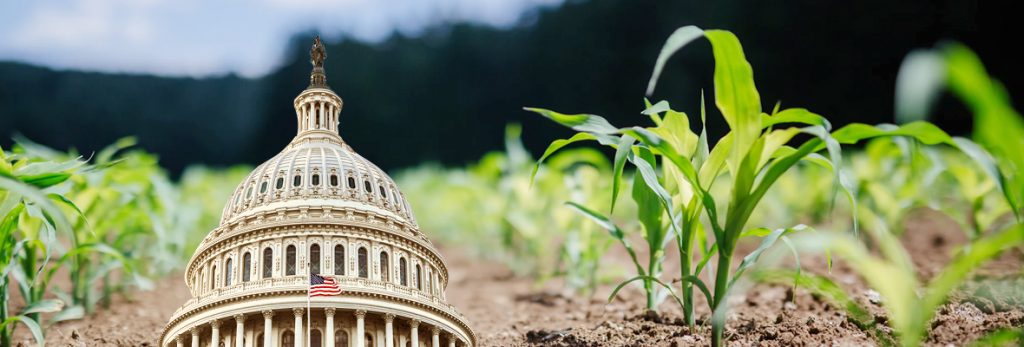
POLICY DRIVES POSSIBILITY
Science is needed to shine a bright light on better paths forward. Policy change creates the guardrails needed to keep progress moving in the right direction.
Most of today’s public health problems facing farmers, food industry workers, and rural communities stem from how economics, technology, and policy have driven change on farms and along food-value chains.
Many billions of dollars have been invested over the last half-century in creating the systems and infrastructures that govern how most food in America is grown, handled and stored, processed, and sold to consumers.
Think of all the money invested in how just one form of nitrogen fertilizer — anhydrous ammonia — is manufactured, transported, stored, and applied on farms across the country.
Compare the billions invested by the government and private companies to produce and supply anhydrous ammonia fertilizers, to the modest investments made over the last one-half century in all other forms of nitrogen, including legume crops, compost, and the conversion of animal manure and organic waste into fertilizer.
To a significant extent, tax-funded R+D and subsidies have driven public and private investments in the infrastructure that, in turn, determines the relative costs and availability of farming inputs and technology. In this way, they shape how food and farming systems evolve . Put simply, policy drives possibility.

Pesticides must be tested and regulated. Pest management professionals responsible for assuring their safe use have to be trained and empowered with accurate, timely information. Doctors need information on the ways pesticides and animal drugs can trigger disease or impose acute hazards on those occupationally exposed.
The capacity to carry out pest control and pesticide-risk management tasks too often falls short of need. In fact, across America animal diseases and crop pests are more serious than ever, despite all the new chemistry, drugs, and genetic technology that has been used to keep both in check. The problem is not inadequate investment in pest management systems and technology, it is how this investment has been deployed, coupled with the ways that farming systems have changed. Too many farmers are paying more and more for pest management systems that work less and less well.
WHY?
The answer arises from how farming systems have changed. Specialization, housing too many animals in small spaces, and systems that are drug and chemical-dependent by design have opened new ecological niches for pests and animal disease. Farming system specialization and scale have also undermined the biological and ecological cycles and interactions that have traditionally helped farmers raise healthy crops and animals with far less reliance on animal drugs and pesticides.
Today, too many farmers adopt the latest silver bullet technology in their quest to overcome some old or emerging threat to crop yields and animal production, but do so at the expense of soil and animal health, and food safety and nutritional quality. Policy has incrementally pushed and/or enabled farming system changes that have made US Ag Inc less resilient and more vulnerable to a wide array of risks and undercurrents. Systemic policy change will be needed to turn the ship around and will work only if sustained for many years.