
Defining and Delineating Ultra-Processed Foods
These comments are submitted on behalf of the Heartland Health Research Alliance (HHRA), a non-profit organization conducting research on the impacts of farming systems on the environment and public health (hh-ra.org), and the Swette Center for Sustainable Food Systems at Arizona State University.
HHRA and the Swette Center submitted comments dated July 15, 2025 to the FDA on its proposed front-of-package nutrition labeling system. In February, 2023, HHRA and the Swette Center submitted comments to the FDA on the definition of “healthy” food and related measurement challenges. In our 2023 comments, we recommended adoption of novel metrics to quantify food nutritional quality as part of an analytical system called NuCal; two co-authors of these comments (Benbrook, Mesnage) published a paper describing NuCal in 2024.
The co-authors of these comments on ultra-processed foods are (alpha):
Mr. Dan Barber, Chef and Co-Owner, Blue Hill Restaurant at Stone Barns.
Dr. Charles Benbrook, former Executive Director of HHRA.
Anne Biklé, science writer who, with David Montgomery, authored What Your Food Ate: How to Heal Our Land and Reclaim Our Health (2022).
Dr. Asa Bradman, University of California, Merced and member of the HHRA Board of Directors.
Dr. Steven Chen, Chief Medical Officer of the Recipe4Health, a food-as-medicine program in Alameda County, California.
Dr. Donald R. Davis, retired nutrition scientist who has conducted extensive research on historical changes in food nutrient content.
Mr. Alan Lewis, Vice President for Government Affairs, Stakeholder Relations, and Organic Compliance at Natural Grocers.
Dr. Kathleen Merrigan, Executive Director of the Swette Center, Chair of HHRA’s Public Policy Advisory Committee, and former USDA Deputy Secretary.
Dr. Robin Mesnage, scientist conducting genomics and metabolic research on food safety and nutritional quality at the Buchinger Wilhelmi Clinic in Uberlinger, Germany. Mesnage and HHRA science advisor.
Dr. David Montgomery, professor of geomorphology at the University of Washington in Seattle, and expert on how soil health impacts food nutritional quality and human health.
Ms. Mary Purdy, MS, RDN, Managing Director of the Nutrient Density Alliance and Adjunct Faculty at the Culinary Institute of America.
Mr. Bob Quinn, PhD, founder of Kamut International, and an organic farmer in Montana who has recently founded a regenerative organic research institute on a portion of his farm.
Dr. Adam Shriver, Director of Wellness and Nutrition at the Harkin Institute at Drake University in Des Moines, Iowa.
Dr. Andrew Smith, Chief Scientific Officer of the Rodale Institute.
Mr. Tom Willey, retired California organic farmer and host of the “Down on the Farm” podcast.
Access to multiple documents drawn upon in the preparation of these comments is provided via hyperlinks in the text. Citations to published papers appear in “References”.
Table of Contents
- I. Summary and Key Recommendations.
- II. Why Define, Measure, and Label Food by Degree of Processing?
- A. Evidence Linking Processed Foods to Adverse Public Health Outcomes Has Not Been Matched by Efforts to Reverse the Decline in Food Quality and Safety.
- B. Classifying Foods by Degree of Processing.
- 1. Food-as-medicine Programs Bring New Focus on Food Nutritional Quality.
- 2. A Key Challenge Confronting the FDA and USDA.
- C. Terminology and Focus.
- III. Taking Account of Food Manufacturing in Delineating the Degree of Processing
- A. Key Concerns and Metrics Needed to Identify UPF.
- 1. What’s Lost?
- 2. Nutritional Quality Should be the Bedrock Metric.
- 3. What’s Added?
- 4. New Risks?
- B. Classifying the Degree of Processing in Food Products.
- 1. Generic Food Processing Classification Criteria Applicable to All Products.
- 2. Food Group Specific Criteria Needed in Classifying the Impacts of Processing.
- C. Vetting the System to Achieve Continuous Improvement.
- IV. Questions Posed by the FDA-USDA.
- A. Supporting Cohesive Research, Continuous Improvement, and Consistent Guidance to Consumers
- B. Responses to Questions 1-5 Posed by the FDA-USDA.
- V. Conclusions and Recommendations.
- References.
I. Summary and Key Recommendations
Improving the safety and nutritional quality of ultra-processed foods (UPF) is among the most promising — and attainable — options to enhance the health of the American public. Doing so will require major changes in policy, technology, consumer awareness, and market dynamics.
Manufacturing and selling unhealthy UPFs is profitable and accepted in the US. For this reason, chronic diseases rooted in unhealthy food and dietary patterns, including metabolic syndrome, Type 2 diabetes, and cardiovascular disease, are undermining well-being. Health costs will also continue rising.
We commend the FDA and USDA for seeking guidance on how to define and classify foods based on the impacts of processing. Government action will be essential to achieve meaningful improvements in public health. Left unchecked, current trends will exacerbate already serious health, policy, and fiscal crises. To turn the tide, manufacturing safe and nutritious UPF must become the most profitable option for the food industry.
Forging consensus on how to define and measure the degree of processing is an essential first step. We argue this must be done through the lens of public health. Metrics used to measure the degree of processing in a finished food product must be grounded in changes in the nutritional quality and safety of food products, and ultimately, impacts on public health outcomes.
Defining and classifying mostly whole and fresh foods is straightforward. The degree of processing in a finished processed food product, and its impacts on public health, should be determined as a function of:
- Nutrients and health-promoting phytochemicals that are lost or altered as a result of processing,
- What is added in recipes, or via processing technologies, and
- Whether, and to what extent, milling, oil extraction, other processing methods, and cooking creates new, or exacerbates existing, food safety hazards.
The foundational metric should be the percentage loss of nutritional quality as a result of processing. Such a calculation should be made across all individual nutrients with a Recommended Dietary Allowance, or an equivalent daily intake benchmark required to sustain good health.
The total amount of each essential nutrient in the raw ingredients required to manufacture a serving of processed food should be measured, just as the food industry now does for nutrients featured in a Nutrition Fact Panel. A method is also needed to account, as fully as possible, for phytochemical content and total antioxidant activity. The amount of each nutrient remaining in a serving of processed food will need to be quantified. The difference between the two amounts can then be expressed as a percentage of the amount of each nutrient in the raw ingredients.
A negative percentage represents the degree to which a nutrient in a processed food’s raw ingredients has been lost in the process. The closer to no loss of nutrients, the better. Such calculations need to be made both counting, and omitting, any supplemental nutrients added in recipes. The percentage of nutrients in a processed food that is derived from its raw ingredients, versus the percentage from additives and fortification, is a second, important metric that the FDA and USDA should incorporate in their forthcoming classification system.
The loss of nutrients as a result of food processing is a hidden tax on economic efficiency in the food system. The need to fortify processed foods to replace some of the lost nutrients represents an added cost, and may or may not provide health benefits comparable to the nutrients in raw ingredients and whole foods.
The amounts of different nutrients vary markedly across foods and ingredients. Some key nutrients are biologically active and promote health at very low levels in food (e.g., vitamins, phytochemicals), while other macronutrients are present at concentrations 100-fold or more higher (e.g., protein, fat, fiber). For this reason, the core metric used to quantify nutrient losses and retention should be expressed relative to each nutrient’s RDA. Overall differences in nutritional quality can then be estimated by adding together the changes across all nutrients evaluated in a given processed food.
By major food groups, we recommend that standards be set by the FDA-USDA for the percentage changes in overall nutritional quality relative to applicable RDAs (or equivalent benchmarks). For example, the triggers determining where a given food lands in a processed food classification system could be:
- Foods in which 95% of the nutrients in raw ingredients remain present and essentially unchanged in a food product could be classified as “whole or lightly processed”.
- “Processed” food should retain 75% to 95% of the nutrients in the raw food ingredients required to manufacture it.
- Foods retaining less than 75% of the nutrients in the raw ingredients, or in which the form of nutrients is degraded, should be regarded as UPFs.
Through all feasible mechanisms, the FDA-USDA should encourage, motivate, and reward shifting daily servings from unhealthy UPFs to mostly whole, fresh foods. The government should provide the food industry clear guidance on how UPF products need to change to become acceptably nutritious and safe.
But the most important challenge – and change – is on all of us. Ultra-processed foods made with industrial-milled grains and laden with added sugars, salt, and fats must be enjoyed occasionally. Thoughtful and systematic pursuit of these three objectives over a generation could transform the US diet from one of the least healthy to most healthy in the world.
Government and scientific communities need to develop new classification systems and metrics for the purpose of food labelling and consumer education, as well as new tools to advance research on the health outcomes brought about by changes in food processing methods and technology. We also recommend that basic metrics and concepts in these two systems should be aligned to the full extent possible so that public-health focused epidemiological research is aligned to the full extent possible with food labelling and regulatory requirements.
Last, transforming the food system will take incremental progress sustained over many years. We urge the FDA-USDA to jumpstart progress by proposing initial metrics and classification systems by the end of 2026. Efforts to drive change should begin where opportunities to do so are widely embraced by nutrition and public health experts. Such opportunities abound.
II. Why Define, Measure, and Label Food by Degree of Processing?
The nation must now confront an awkward tension at the intersection of diet, agriculture, and health. We commend the FDA-USDA for addressing public health issues arising from how food is grown, processed, and manufactured in America. The evidence is now overwhelming that some processed foods are contributing to a range of adverse health outcomes, and in particular, disturbing trends in diet-related chronic diseases including Type 2 diabetes, cardiovascular disease, morbidity and mortality, shorter life expectancy, microbiome dysbiosis, human reproduction, and impacts on neural development and brain structure.
A study analyzed the impacts of the Lancet Commission’s recommended Plant Health Diet (PHD) on health outcomes and the environment. It encompassed 413,900 person-years of follow-up (mean duration 9.3 years) of U.S. National Health and Nutrition Examination Survey (NHANES) participants, and 1.54 million person-years (mean 12.3 years) of individuals in the UK Biobank (UKB). In the case of fully-adjusted models, Wang et al. (2025) report an association between the plant-health diet and a reduction in overall mortality of 23% (NHANES) and 16% (UKB). The authors conclude that:
“Overall, our research findings demonstrated that adherence to PHD [Plant Health Diet] reduces the risk of mortality and colorectal cancer, lung cancer, CVDs, CHD, stroke, and diabetes and simultaneously mitigating GHGe [GHG emissions]. This analysis highlights the importance of promoting PHD for improving public health and combating global climate change.”
A letter on ultra-processed food (UPF) published in Nature Medicine states that:
“Compulsive consumption of ultra-processed food and an inability to self-regulate despite negative consequences unquestionably meets the DSM-SUD [Diagnostic and Statistical Manual of Mental Disorders; Substance-Use Disorders] criteria…there are now nearly 300 studies across 36 countries documenting that processed junk foods cause patterns of intake typical of drug addiction”.
The final paragraph in the above quoted letter states: “We are now facing a public health crisis of even greater magnitude…” than smoking. Like smoking, the implementation of meaningful interventions to improve the safety and nutritional quality of UPFs remains, still, seemingly out of reach many years after the need for such action became clear.
A. Evidence Linking Processed Foods to Adverse Public Health Outcomes Has Not Been Matched by Efforts to Reverse the Decline in Food Quality and Safety
In 2009 Dr. David Kessler, a former Commissioner of the FDA, published a book entitled The End of Overeating: Taking Control of the Insatiable American Appetite. The book lays out the then, already-strong evidence supporting the need to address the addictive nature of many UPFs.
The 1972 Britannica Yearbook of Science and the Future contains a section entitled “Foods and nutrition” written by Dr. George Briggs, Professor of Nutrition at the University of California – Berkely. Briggs was then serving as the editor of the Journal of Nutrition Education and advised government agencies on nutrition policy. The five-page Britannica Yearbook overview of developments in food and nutrition science contains a number of facts and insights:
- An average 276 pounds of “highly processed foods” were consumed by Americans in 1970, and provided about 50% of total caloric intake,
- The other ~50% of calories came from 259 pounds of per capita intake of mostly whole foods,
- “Unfortunately, half the American public was eating greater amounts of the highly processed foods than the ‘average’ person. It was those persons who had most of the nutritional problems”,
- “…it appeared that the food habits of Americans were getting steadily worse instead of better…the average American consumed more soft drinks (32 gal) than milk (22.6 gal)”, and
- “The average American was eating (on a dry basis) more white sugar than eggs, fruits, and vegetables combined”.
Quoting Dr. Briggs, a December 5, 1971 story in the National Enquirer described the typical American diet as a “National Disaster”. Dr. Briggs also asserted that “If I fed it [American diet] to pigs or cows, without adding vitamins and other supplements, I could wipe out the livestock industry”.[1] By the end of the 1960s, chronic diseases rooted in malnutrition and overconsumption of empty calories were costing the nation “$30 billion per year…nearly 50% of our total health care costs” according to Briggs.
Over the last 50 years:
- Processed foods now account for an even greater share of average daily caloric intakes (~60%),
- The adverse impacts of processing and cooking methods on food nutritional quality and safety have increased markedly as a result of the successful pursuit of longer shelf lives, enticing flavors, and convenience,
- New processing technologies and cooking methods enabled large food companies to industrialize over three-quarters of the U.S. food supply, generating steady profits for shareholders and the emergence of homogenous and national food-product distribution networks,
- Foods once cooked one batch at a time in home kitchens, and for the most part, utilizing locally grown ingredients, have been displaced by mass-produced industrial products made from the cheapest ingredients available that can be mixed together with machines, augmented with chemicals and chemically-altered ingredients, and cooked as rapidly as possible, and
- Scientific research has discovered many of the mechanisms through which declining industrial-food quality and safety, coupled with unhealthy dietary patterns, have contributed to today’s epidemic of diet-driven chronic disease.
Plus, the many adverse public health outcomes triggered, or made worse, by poor food and diet quality is steadily expanding beyond recognized cardiometabolic outcomes. For example, recent research in the UK has reported adverse impacts of UPFs on neurodevelopment and brain structure that likely alter the function of brain regions that regulate food-intake in ways independent of increased adiposity. In a prospective cohort study, replacing 10% of UPF intakes (roughly two-thirds of a serving of UPFs) with minimally processed foods reduced risk of dementia by 19%.
These and other scientific findings are undermining confidence in the quality and safety of the U.S. food supply. A 2025 survey by the International Food Information Council reports that confidence in food safety has fallen to an all-time low, with only 55% of 3,000 surveyed adults “very” or “somewhat” confident in food safety, a drop from 70% in 2023. In 2025, only 11% of respondents were “very” confident. Growing concerns over UPFs is among the reasons why.
But which processed foods, and why? And how are processed foods, individually and collectively, contributing to adverse public health outcomes? Answers are urgently needed to achieve rapid progress in improving public health outcomes
B. Classifying Foods by Degree of Processing
Methods and criteria to identify ultra-processed foods are proliferating at all levels of government, and especially at the state level (e.g., legislation has been adopted or is moving in California, Texas, and multiple other states). New York City has recently proposed significant changes that “… restrict artificial colors and increase restrictions on low-and no calorie sweeteners as well as increase weekly offerings of minimally processed plant proteins, among other changes.” The NYC Mayor’s Office of Food Policy states that “Food is an effective tool to fight chronic disease and improve our environment. Baking these Standards into every meal fosters a healthy future for people, communities, and the planet.”
Some jurisdictions are striving to reduce daily servings of UPFs in schools, while others are imposing new taxes on “junk” food. But all such efforts face challenges in identifying food products that fall in the “junk” food category. Other hurdles arise in determining how to set, and justify, levels of taxation.
Professional organizations are issuing calls for action to limit intake of UPFs, including most recently a science advisory focused on cardiometabolic outcomes issued by the American Heart Association (AHA). Food certification organizations are developing standards and criteria for identifying UPFs, and are beginning to offer labelling and verification services to food manufacturers (e.g., see the Non GMO Project’s UPF-free program).
The research community has developed systems to gauge the degree of processing in a food product (e.g., the AHA policy paper in the journal Circulation contains a useful table describing the core features of the most widely used processed-food classification systems).
1. Food-as-medicine Programs Bring New Focus on Food Nutritional Quality
A growing number food-as-medicine (FAM) programs are developing ways to promote positive clinical outcomes by coupling nutrition education with improved access to healthy food choices (e.g., the Food4Health program).[2] Such programs often target and serve communities facing multiple health-care challenges. In a Seattle, Washington cohort study, a $40 per month healthy-food benefit payment improved both food security and fruit and vegetable (F&V) intakes.
An assessment of 22 FAM produce-prescription initiatives in 12 states reported encouraging results. Benefits supporting purchase of F&V averaged $63/month, leading to a nearly 1-cup increase in average daily consumption. Significant and multiple cardiometabolic benefits were recorded after 4-10 months of program enrollment, as well as a one-third reduction in food insecurity. In order to expand access to FAM interventions, a host of clinical care, billing, and coordination issues must be effectively addressed, as the case in a program at the University of Texas Southwestern Medical Center.
A critical challenge for all FAM programs is developing practical ways to choose the foods for inclusion in weekly boxes, or via supplemental payments for healthy foods. In addition, such FAM programs often recommend that patients limit intake of UPFs, but struggle in communicating to patients what commonly consumed, multi-ingredient foods are ultra-processed, and which are not.
Continued reliance on existing processed-food classification systems, including the most widely used NOVA system, may undermine, or dilute, the full scope of public health benefits stemming from FAM programs and investments. Such an unwelcome outcome could arise if and as some patients are steered away from healthy processed foods,[3] and/or through attenuation (limiting) the capacity of epidemiologists to identify linkages between high levels of UPF intake and adverse health outcomes. The NOVA system also misses another factor impacting the nutritional quality and safety of the U.S. food supply – the many adverse impacts of changing farming systems and declining soil health, coupled with incrementally higher dependence on commercial fertilizers and toxins (pesticides, animal drugs, GMO traits) in bringing a crop to harvest and in the production of animal products.[4]
2. A Key Challenge Confronting the FDA and USDA
In developing a data-driven definition of ultra-processed foods, and a practical way to identify such foods, the FDA and USDA need to explain what it is about food processing methods, coupled with food-product recipes and cooking methods, that make some, but not all, processed foods unhealthy.
Processing-related metrics and measurement methods should place heavy weight on widely accepted properties of food that are generally associated with positive – and negative — health outcomes. There is ample “low hanging fruit” to harvest including baked goods and beverages devoid of nutrients but laden with added sugar.
The characteristics and attributes associated with healthy, in contrast to less healthy, processed food products must be specific and detailed enough to provide guidance to the food industry on how to make its brand name products healthier. Metrics and measurement systems also should be amendable to, and support the crafting of simple, clear, and actionable guidance to consumers that can be communicated in the limited space typically available on food-product packaging.
Increasing the number of daily servings of fresh, whole and lightly processed foods, coupled with fewer servings of unhealthy UPF with significant amounts of added salt and/or sugars, is the surest path to improved health outcomes for individuals and the nation as a whole.
As part of an effective UPF evaluation system, it is also important to assess what happens to the health-promoting vitamins, minerals, macronutrients, and phytochemicals in harvested crops after they leave the farm. Naturally-occurring compounds and microbial metabolites such as ergothionene warrant increased focus to better understand how soil health is influencing their levels in the human diet.[5] Breaking raw food ingredients into their component parts provides the food industry additional degrees of freedom in handling, mixing, and cooking processed foods, but often at the expense of significant loss of nutrients from the human food supply.[6]
Loss of nutrients undercuts efforts to secure profitable market prices for crops grown in healthy soils. To make America healthy again, farmers and ranchers have critical roles to play in producing nutrient-rich and contaminant-free crops and livestock products. But today, relatively cheap, low-quality corn, beans, and grains are meeting the needs of most industrial-scale food manufacturers. As a result, farmers producing high-quality crops sometimes struggle to find buyers and food companies willing to pay a premium.
Most consumers accept that quality-enhanced products cost more than those made from cheaper ingredients and/or manufactured via systems that emphasis speed more so than quality. But with a few exceptions, there is often a disconnect between nutritional quality, safety, and price across most of the U.S. food supply.
This is why systematic effort is warranted to operationalize and scale a global campaign to both promote food-as-medicine and find ways to reward farmers and ranchers for producing healthier products.
Eating fewer cookies is a necessary step (even when baked at home using quality ingredients), but systematic changes will have to be made in what is grown and how, and what is done to whole foods as they move along food-value chains. In short, a food-system transformation will be required to rise to the aspirational challenge inherent in a widely encountered adage: “Healthy soil. Healthy plants. Healthy people.”
Removing hurdles holding back farming and food-system innovation will require enlightened leadership from the FDA and USDA, as well as changes in laws, regulations, and market dynamics. Change must collectively make growing, processing, and selling healthy food the most profitable option at each node along food value chains. Defining healthy food and UPFs through the lens of public health can serve as the north star of such efforts.
A logical way to move forward is to compare what’s in a finished processed food as sold to consumers, to what is in the whole and lightly processed ingredients required to manufacture the processed food.
These comments describe the essential features of such a system.
Operational details will need considerable thought and vetting. Continuous improvement will depend on more research and careful testing. But the essential components discussed in these comments will be needed in order for the government to build an equitable, robust, flexible, and science-driven system that meets the pressing needs of the day.
C. Terminology and Focus
Food-nutrition terminology appears in the literature and government documents with variable definitions and nuances. These comments utilize some of these widely used terms.
A “finished food product” is one ready for sale to consumers, or to be served to consumers out of a bag, bottle, or other container.
“Food manufacturing” encompasses the combined impacts of recipes and food processing on the nutritional quality and safety of foods as sold or served.[7]
“Nutrient density” in a serving of food is calculated based on the quantity of a nutrient in the serving relative to the nutrient’s RDA or functional equivalent.
“Nutritional quality of a serving of whole or processed food refers to overall nutrient density relative to caloric content. By “overall,” we mean nutrient density across all health-promoting nutrients in a serving of food, including those that are known and currently measured, and those that are not known and for which there are no RDAs.
There is a plethora of naturally-occurring nutrients and health-relevant compounds for which there is no RDA. Termed nutritional dark matter, research in this area has identified about 140,000 compounds in whole and minimally-processed foods, including about 2,000 used as pharmaceuticals. In contrast, USDA food composition databases track only about 150 micronutrients and macronutrients, most of which are linked to energy intake.
Clearly, there is much work to do in more fully characterizing the health-promoting potential of plant-based foods, as well as the degree to which processing undermines this potential. We call on the FDA-USDA to invest more heavily in research and data development so that future classification systems and epidemiological studies will have a better chance of detecting the ways food quality can impact public health outcomes.
An important caveat — the nutritional quality of a serving of food should be quantified with and without the impacts of nutritive additives and fortification; calculations should include as many nutrients as possible. Results of such calculations must be interpreted cautiously since there is limited, or no data on many health-promoting phytonutrients in most foods.
It is also important for the FDA-USDA, food industry, and public health community to recognize that food processing and manufacturing processes lead to both detrimental and positive changes in finished food products, both of which must be taken into account to achieve the government’s stated goals.
A “contaminant” is something in or on food that was not produced by the plant from which a crop was harvested. Contaminants can be human-made (e.g., pesticides, certain fertilizer ingredients, genetically altered genes), and natural (e.g., mycotoxins, heavy metals). A few are risky at some level, including some vitamins, and several can be beneficial.
The discussion of possible food safety “risks” in these comments refers to something in a whole or processed food product that is, or may be linked to adverse health outcomes. Other risks can arise from a person’s metabolic or physiological response upon eating a given food product (e.g., a food allergy).
Risk is an inherently relative term. It can only be quantified for specific contexts and circumstances. For example, who is exposed to what, at what levels, and for how long. Certain risks in food will never be eliminated (heavy metals, mycotoxins). Others are present in food as a result of actions by farmers, other people, and inclement weather. Current law and regulations appropriately strive to identify, and mitigate to the extent possible, known sources of risk in the food supply, yet many risks remain elusive. Plus, the level of scientific certainty required to limit risks via regulation often outpaces science and accessible data.
The setting of acceptable “risk” thresholds is an important, complex, and contentious responsibility of governments around the world.[8] There is a general presumption in the food industry, and among regulatory authorities, that limiting the levels of known, possibly harmful contaminates or chemicals in food to or below applicable, government set thresholds ensures that the food “safe”.
Yet “safe” thresholds have been set for only a subset of possibly harmful contaminants in food. Many existing safety thresholds are based on old, outdated, and sometimes flawed, science. Very little is known about the distribution of exposure levels across the population, or about the unique risks faced by vulnerable populations. So, as a practical matter, it is not possible to conduct meaningful, science-based risk assessments for many such contaminants.
Plus, new science is, and will undoubtedly continue showing that some existing thresholds are too high, and hence allow people to be lawfully exposed to unsafe levels of some chemicals or natural compounds. New science will also sometime show that current safety thresholds are excessively conservative (i.e. lower than need be).
Last, mother nature never rests and evolution is driving organisms to find ways to adapt and survive. Some innocuous species will become hazardous to some people. Climate change, research with risky human pathogens, and excessive drug or chemical use can accelerate evolutionary changes, and create more virulent variants of organisms that have been present for thousands of years (e.g., covid 19 SARS, crop pests that become resistant to pesticides, or animal diseases that become resistant to once-effective medications).
But one thing about “risk” is widely accepted – less is better. For this reason, in developing new policies, testing requirements, and metrics applicable to processed foods, the FDA-USDA should take advantage of opportunities to better understand and reduce known food safety risks.
III. Taking Account of Food Manufacturing in Delineating the Degree of Processing
In classifying processed foods relative to public health outcomes, the primary focus of consumers, chefs, and dieticians will be on:
- What is lost as a result of food manufacturing (nutrients, flavor, and uniqueness grounded in place and production systems),
- What is added to finished products (fortification, storage stability, convenience, excess salt, artificial flavorings, preservatives), and
- How and whether food manufacturing alters food safety, or triggers changes in the food matrix that, for example, heighten adverse metabolic responses.
- Whether and how processing impairs gut microbiota and alters signaling or immune response.
Several technical challenges will need to be overcome in classifying the degree of processing in ways that will resonate with and motivate consumers to seek healthier alternatives. Novel testing and technical challenges will include how to address imbalances in nutrient concentrations and intakes, factors impacting bioavailability, and antagonistic relationships between nutrients. Many devils lurk in such challenges.
The presence and levels of toxic contaminants in processed foods, if any, must be evaluated on the basis of solid, contemporary data on actual levels in food products as sold to consumers. Likewise, possibly unhealthy compounds created via milling, extraction, and other processing and cooking methods must be evaluated and mitigated, as called for in existing law and regulations. These will include advanced glycation end products, acrylamide, heterocyclic amines, among others.
The proliferation of synthetic chemicals and their unintended incorporation into food products should also be addressed. “Food contact chemicals” number in the thousands. Bisphenol A (BPA), phthalates, and “forever” chemicals (e.g., substances containing perfluoroalkyl and polyfluoroalkyl) are the most familiar FCCs and of particular concern in the pre-and peri-natal timeframe.
There are multiple sources of FCC contaminants, among them coatings on metal containers used for storage and transport, as well as a wide variety of plastics (including microplastics and nanoplastics) found in food processing machinery and equipment. Finally, plastic, cardboard, and metal used in final packaging are additional sources of FCCs.
Researchers who study the plethora of FCCs note the gravity of this problem:
A. Key Concerns and Metrics Needed to Identify UPF
Ideally, a few simple metrics will be developed that quantify both the nutritional quality of a serving of food and the impacts of processing and food manufacturing. Then, the FDA-USDA can develop novel ways to combine such metrics into actionable guidance.
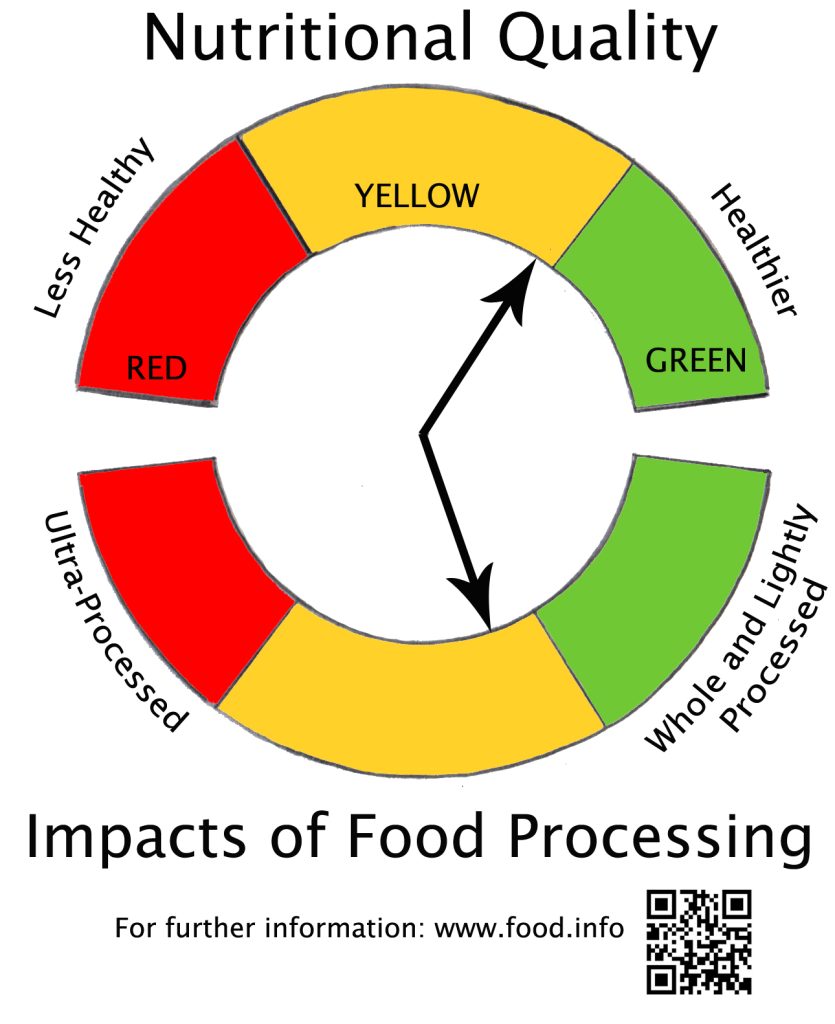
Figure 1 is an example of a combined, front-of-pack graphic image adapted for these comments from a 2024 paper in Foods by Benbrook and Mesnage (two co-authors of these comments).
Figure 1. An Option to Convey Nutritional Quality and the Impacts of Processing Information in a Single Front-of-Pack Graphic (hypothetical food)
1. What’s Lost?
The loss of essential minerals and nutrients that are present in raw foods when they leave the farm must be quantified into account in any meaningful system analyzing the impacts of food processing, manufacturing, preparation, and cooking on food-driven public-health outcomes.
Consideration of the magnitude of such losses in the government’s forthcoming UPF classification system will be critically important. But doing so will not fully address some key differences between whole foods and most UPF.
Minerals play unique roles in promoting positive health outcomes. For eons, minerals have been the most concrete linkage between the composition of the human body and the place where people live (or where their food comes from). Phytochemicals in food are different. They are products of the environment plants grow in. Phytochemicals are shaped by the complex interplay of plant genetics, abiotic and abiotic conditions, and plant stress. There are also dizzyingly-complex cross-species interactions both above and below the ground, day in and day out. These processes shape the living and encompass the dead. They form the core of ecology and drive the changes brought about by evolution.
Unlike phytochemicals, minerals come from bedrock. Plants will not grow without them. In many cases, microbial symbionts that live in soils modulate plant uptake of minerals, which go on to form the core, or backbone, of many molecules that play essential regulatory roles in human genetics, physiology, immune response, reproduction, and aging. Minerals are essential in creating a new, healthy human, and remain so in sustaining good health as people age. Mineral deficiencies are widespread, and are expected to worsen in the wake of climate change and the now, near-ubiquitous chemical-based agricultural systems that too often erode soil and degrade its health.
Some lightly processed and whole foods are composed of ingredients derived from animals (meat, milk, eggs, fish). Such foods are nutrient dense and often consumed by people without major changes in their composition, and still retain combinations of minerals that reflect the health of the soil in which crop plants and animal feed was grown, coupled with farming-system choices and the biology of place.
Whole foods are created through the activity and proliferation of plant and animal cells that engage in complex biochemical interactions driven by the sun. For plants to be healthy, and successfully reproduce, these cellular processes require amino acids, fatty acids, carbohydrates, vitamins, and minerals, and in properly balanced combinations that differ across species and environments.
There is a biochemical unity in the nature of all living things, including humans, that must be sustained for living organisms to survive and reproduce.
Human cells sustain life through biochemical interactions that are driven by many of the same, or similar, substances produced by plants.[9] When people consume whole foods, they ingest an assortment of the essential nutrients and phytochemicals plants needed and we need, thereby setting the stage for healthy cellular and metabolic functions.
The biochemical integrity in whole foods is dynamic and resilient. It has been preserved and refined over eons. It has co-evolved with, and sustained human life among those with access to an ample, and reasonably balanced food supply. Our ancestors lived and reproduced min a wide range of environments, and with very limited knowledge of nutrition. A study published in 2025 on the impacts of micronutrient and phytochemical deficiencies on global population health and human evolution drives home this point:
“We conclude that micronutrient deficiencies have likely shaped worldwide human evolution more directly than previously appreciated and, given the ongoing depletion of soil quality from over-farming and climate change, caution that some populations may be at higher risk of suffering from micronutrient-driven disorders going forward.” [Emphasis added]
When humans physically dismember whole foods, it leads not just to the loss of essential nutrients, but to uncoupling their capacity to work together to promote human health. The impacts of inadequate and/or imbalanced nutrient intakes are made worse when just certain parts of whole foods are combined with unnaturally high amounts of added sugars, fats, and salt in processed foods. The result of such combinations are now tragically obvious, and serious, in America.
These insights point directly to the solution emphasized in these comments – people need to eat considerably more whole foods, and much less processed foods high in added sugars, fats, and salt.
The key challenge for the FDA-USDA in addressing UPFs is how to encourage people to make this simple change. It will also be important to avoid diluting the power of this message via a protracted process and endless debate over the nuts and bolts of a system to identify UPFs.
2. Nutritional Quality Should be the Bedrock Metric
The core “What’s Lost?” metric for individual nutrients should be a ratio: the amount of each nutrient in a single-serving of the finished product, compared to the amount in the raw food ingredients required to manufacture that serving of the food product. The smaller this ratio, the greater the adverse impact of food processing on the amount of the nutrient in a finished food product.
An aggregate measure of “What’s Lost?” can be calculated by the sum, or an average, of the above ratios for each nutrient in the raw ingredients required to manufacture a serving of a processed food product
Focus should be on widely recognized, essential nutrients with a Recommended Dietary Allowance (RDA) or its equivalent, and secondarily, on intakes of health-promoting phytochemicals.
For purposes of quantifying the impacts of processing technology on nutrient content in a finished food product, these calculations should exclude the contribution of additives and fortification. Whether replaced or not, processing that sacrifices the nutrients in raw agricultural products should be highlighted, and to the extent possible, phased out or altered in ways that lessen the loss of nutrients and phytochemicals.
Ideal processing and cooking methods preserve almost all the nutrients and phytochemicals in raw ingredients, resulting in minimal impact of food manufacturing.
3. What’s Added?
Curtailing the loss of nutrients in raw agricultural ingredients is a critical step, but it must be coupled with limits on added sugars, fats, and salt. These three ingredients are added mostly for taste, palatability, compatibility with industrial-scale processing and cooking methods, and nationwide distribution.
Most minor additives are included in recipes to achieve a particular goal, or enhance an existing or new attribute in the finished food product (storage stability, ease of mixing, compatibility with a range of cooking methods, preserving flavor, avoiding bacteria or mycotoxins).
Enrichment of refined grain products began in 1941 and became mandatory in 1943, at a time when the factors giving rise to the need for “enrichment” were essentially ignored. The nation would almost certainly not be facing such dire public-health consequences driven by UPF if, in 1941, the government had chosen instead to invest in minimizing the loss of nutrients in the grain milling process.
In the case of the majority of processed foods, there are many options to achieve a given finished-product attribute. Some options pose few, or no, new risks or loss of nutrients. But cost, ease of use, and year-around accessibility of large quantities of standardized inputs vary across options, and usually determine which, among competing options, is selected within large-scale, mass-market food companies.
As a general rule over the last half century, the addition of additives in industrial-scale food manufacturing has proven to be the least expensive and/or simplest way to achieve many goals. The food industry has generally not invested systematically in R&D designed to enhance the cost-effectiveness of alternative, non-chemical ways to secure the product attributes sought through the inclusion of additives in product recipes.
This is among the long-standing systemic biases in our current food system that will require concerted efforts to transform into an equally systemic bias in favor of non-chemical solutions to most common food processing and manufacturing challenges.
An essential step in quantifying what’s added in a processed food product is compiling a list of the additives in each such product. The list should be accompanied by the amounts (grams) and associated calories (if any) stemming from each additive, and all additives together. Results should be expressed per serving, and readily accessible to consumers, public health scientists, dieticians, and consumers.
The aggregate amount in grams and calories from additives in a serving of food can then be expressed as a percentage of the serving’s total weight and calories.
However, the FDA-USDA must recognize that small amounts of some additives can markedly alter food safety, nutrient bioavailability, and metabolism. Such impacts must not be allowed to slip out-of-sight.
Classification Challenges Raised by Fortification
Whether and how additives that contain nutrients are included in the classification of processed food will trigger discussion and debate. We recommend that the nutritional content (nutrient density) and nutritional quality (nutrient content relative to caloric content) of a serving of processed food should be quantified with and without the impacts of nutritive additives and fortification.
The calculated differences in a serving of food can then be viewed as estimates of the impact of processing on retention of the nutrients in raw agricultural ingredients. This difference should be among the core metrics relied on in classifying the degree of food processing — and its impacts on public health outcomes.
We urge the FDA-USDA to quantify, and place weight on, the amount of essential nutrients that are lost in the manufacturing process for five reasons:
- Such losses sacrifice a degree of the nutritional quality present in food when it leaves the farmgate. This could erode marketplace rewards, and hence motivation, for farmers and ranchers to enhance soil health and adopt the regenerative practices and animal-husbandry systems required to produce nutrient dense and safe raw agricultural products.
- The sources of supplemental nutrients used in food fortification sometimes differ in quality and safety from the nutrients in raw food ingredients.
- The chemical source and form of supplemental nutrients can alter the flavor, texture, cooking qualities, and safety of finished, multi-ingredient foods.
- Some studies report more favorable health outcomes stemming from the nutrients in raw agricultural products compared to equal amounts from exogenous sources of nutrients added to recipes as part of food fortification.
- The processing and manufacturing steps that lead to loss of nutrients, as well as efforts to restore lost nutrients via fortification, add costs in the food manufacturing process and/or degrade product quality.
For example, the milling of wheat and other small grains is known to remove essential nutrients. Scientists and government agencies have measured and reported the percent reductions in many essential nutrients as a function of different milling techniques and practices. Modern milling methods range from those that remove few, if any, nutrients in raw grain, to those that are highly aggressive and deploy combinations of heat, pressure, and chemicals that alter and/or remove significant portions of multiple health-promoting nutrients in raw grain.
For decades, the food industry has sought ways to restore a few of the specific nutrients in raw grains lost in the milling and baking processes (e.g., folate, vitamin B, thiamine). However, the impacts of milling on the concentrations of many hundreds of other health-promoting phytochemicals in raw grains are not monitored, or even recognized. Ignoring the unknown is not a valid basis for the management of the nutritional quality of the U.S. food supply.
Accordingly, when a food manufacturer adds a supplemental source of a known, essential nutrient to replace the amount known to be lost in the milling process, this act of fortification is restoring only one nutrient to, and sometimes above, their pre-milling levels. Such fortification does not restore a host of other substances in raw grain that are also adversely impacted by milling and baking. And as discussed above, the loss of nutrients is accompanied by often-dramatic disruption in the biochemical integrity, or unity, present in whole foods. It can turn healthy foods into unhealthy ones.
The health-promoting value of nutrients arises, in large part, from how they work together to promote cellular and physiological health. Fortification in food processing restores just a tiny fraction of what has been lost from whole foods. There is a widely held, but rarely stated, presumption in the food industry, and among some government scientists, that fortification largely restores what has been lost in aggressive milling and many other food processing methods. This is an unsubstantiated myth that the FDA-USDA, and public health community, should put to rest.
Within the “What’s Added?” category of processing impacts, the core metric could be the percentage of nutrients in a serving of a finished, processed food product that comes from fortification and additives, in contrast to the raw agricultural ingredients incorporated in the product’s recipe. This “What’s Added?” metric should then be coupled with “What’s Lost?” — the percentage of known, essential nutrients in a food’s raw ingredients that remain in a finished, processed food product
4. New Risks?
Dealing with food safety hazards and risky compounds that can find their way into processed foods will be among the most difficult challenges confronting the FDA, USDA, other federal and state government agencies, the food industry, and the research community.
Some generic examples follow. The milling of grain and the peeling of many fruits and vegetables have significant impacts on the pesticide residues present on or in raw foods, as well as in processed food products. Processing often changes where residues in a raw agricultural ingredient wind up. It can both concentrate (i.e. increase) or reduce the level of residues in finished food products.[10]
This category of food manufacturing impacts will pose significant measurement issues. Plus, risks will be context specific and vary across segments of the population as a function of age, sex, and health status. The level of risk arising from a processing technology or food additive for an individual person, and society as a whole, will depend on aggregate levels of intake across all whole and processed food products, and all beverages (and not just the level in an individual food).
Another area of relatively new risk relates to flavor-feedback phenomena arising from hyperpalatable UPFs. Such processed foods are often eaten quickly, sometimes leading to excessive caloric intakes. A “Feature” article by Nic Fleming in Nature (Sept. 4, 2025) summarizes a series of studies shedding light on what might be driving the impacts of certain UPFs on excessive caloric intake, and hence promoting metabolic syndrome. Fleming writes that multiple factors appear to play a role including:
“…increased caloric consumption, higher energy density, faster eating, softer food texture and lower nutritional quality.”
As noted in the opening section of these comments, some scientists feel that certain UPFs trigger a pattern of intake consistent with addiction. While quantifying and mitigating addictive behavior is challenging, overconsumption and excessive caloric intake clearly warrants consideration among the “New Risks” taken into account in classifying the degree of food processing.
A Method to Place Food Safety Risk in Perspective
There are several, to many dozen, potentially harmful chemicals and natural compounds in most foods. Government regulators lack up-to-date, reasonably complete exposure data on nearly all. The science supporting current, hopefully “safe” levels of daily exposure to the vast majority of these chemicals is typically old, and is focused on just a single, possible adverse health outcome. Available studies are not capable of detecting linkages between known exposures and most of the chronic and age-related diseases and health problems facing Americans, nor impacts on human reproduction.
Drawing on current science and knowledge, best-possible estimates should be made by the government of the daily risks stemming from exposures to possibly toxic compounds in food. A simple ratio could become the basis of a new metric to quantify and rank potential food safety risks.
The ratio could be calculated by dividing the amount (weight) of each possibly risky ingredient or substance in a serving of food by an estimate of the amount a person could ingest in a day of the substance with a “reasonable certainty of no harm” as a result. That is the basic standard already embedded in U.S. food safety law.
Calculating such a hopefully safe level is straightforward for a compound if a chronic dietary Reference Dose or Acceptable Daily Intake is available, or can be calculated drawing on published toxicology studies.
These individual risk ratios can then be added together across the possibly risky contaminates in a serving of processed food. The sum can be interpreted as an aggregate estimate of possible food-safety risks in a given food product. Higher scores would reflect foods with relatively higher levels of risky compounds.
A data-driven metric encompassing aggregate risks in processed foods can be calculated. The method to quantify such a metric would mimic the conceptual foundation of nutrient profiling systems that rely on RDAs, or their equivalent, in quantifying the nutritional quality of a serving of food.
While both the quantification of nutritional quality and risky contaminants in food rests upon imperfect test methods and gaps in knowledge, we believe that priority-setting decisions can and should be made drawing upon current data and knowledge. The results of such analytical work will help the government identify the chemicals and contaminants in food that are posing the greatest risks, so that regulatory efforts and research can accelerate cost-effective methods to mitigate risks recognized as not compatible with the “reasonable certainty of no harm” standard in federal law.
We recommend that the FDA-USDA move forward with metrics and measurement systems, and when warranted, new food labeling, that will progressively lower dietary exposures to risky compounds.
B. Classifying the Degree of Processing in Food Products
Multiple initiatives and activities are underway at several levels of government, as well as in the private sector, to improve the safety and nutritional quality of processed foods. The end goal is the same — encouraging and informing consumers on how to make healthier choices.
A method to classify multi-ingredient food products on the basis of processing and food manufacturing is described below. For reasons previously discussed, we urge the FDA and USDA to expeditiously establish preliminary classification criteria determining which food products fall into three categories:
- Whole and Lightly Processed,
- Moderately Processed, and
- Ultra-Processed.
The FDA-USDA should focus the initial set of classification criteria on what is required for placement in group 1, Whole & Lightly Processed, and group 3, Ultra-processed foods. Any food product not assigned to groups 1 and 3 would fall into group 2.
This approach will simplify the near-term challenges facing the FDA-USDA and food industry in terms of food labelling, and allow expedited implementation. We believe there will be modest, but manageable controversy over the criteria applicable to foods that belong in the “Whole & Lightly Processed” category.
But some food companies are likely to contest the criteria determining placement in the UPF category. To limit delays in program implementation, the FDA-USDA should propose criteria and benchmarks governing UPF classification that are strongly supported by robust science and unlikely to inappropriately include healthy, nutrient-dense processed food products.
Overtime, the government can refine the criteria applicable to groups 1 and 3, and may decide to add additional categories in step with the development of more sophisticated metrics, testing methods, and insights from epidemiological research. For example, in the not too distant future, we believe it will be helpful to break out the first category into “Whole Food” and “Lightly Processed” categories.
1. Generic Food Processing Classification Criteria Applicable to All Products
The generic criteria that must be met for a finished food product to be classified in group 1 can be reasonably straightforward.
In the case of “What’s Lost?” and “What’s Added?” criteria, any food product that differs only modestly from the nutritional quality and safety values applicable to the raw ingredients in the food product belongs in group 1. For example, products that differ by no more than +/- 5% to 10% in all applicable metrics could be initially placed in the “Whole & Lightly Processed” category.
The “What’s Lost?” and “What’s Added?” thresholds for placing a finished food product in the UPF category (group 3) could likewise be set based on deviations in the metric values associated with the raw agricultural ingredients in processed food products.
Percentage deviations in UPFs will need to vary across applicable metrics in light of the magnitude of differences in the impacts of food manufacturing and processing methods. We also expect that both the categories of impacts, and applicable thresholds, will evolve as science deepens understanding of what is causing linkages between food manufacturing and altered health outcomes. In particular, we expect new methods and datasets will be needed to properly account for the many ways phytochemicals in raw agricultural products influence health outcomes.
A first, and key, criterion could be based on the NuCal nutritional quality metric. This metric is based on the degree to which a serving of food meets a person’s needs for essential nutrients, relative to the percent of the caloric space the serving of food takes up. The percentage of nutrient needs fulfilled is quantified by dividing the amount of nutrientx in a serving of foody, by the RDA for nutrientx.
The ratios are then added together across all nutrients in a serving of food to generate an estimate of the overall contribution of a serving of food in meeting a person’s nutritional needs. The percentage of the caloric space taken up is simply the calories in a serving divided by typical, daily caloric need to maintain a healthy weight (e.g., 2,100 calories).
In classifying the impacts of processing using this metric, the metric would need to be calculated two ways. First, the quantities of nutrients in the raw ingredients required to manufacture a serving of the finished food product would be used as an estimate of the nutritional quality of the raw ingredients before they moved through the manufacturing process.
Second, quantities in the finished food product would be calculated. Any amounts of nutrients added via fortification would be subtracted from the total level of the nutrient.
Then, the percentage loss of nutrients as a result of the manufacturing process could be used as a criterion for placement of a finished food product in the UPF category (e.g., a 25% or greater reduction relative to the nutrients in the raw agricultural ingredients).
Another simple criterion for placement in the UPF category could be based on the percent of total calories in a serving of a finished food product stemming from added sugars. This calculation is already part of Nutrition Fact Panels and is familiar to most consumers.
A major decision facing the FDA-USDA would be the percentage threshold for added sugars as a percent of total calories. We urge the government to set the UPF added sugar threshold at 20% or more of total calories.
A third criterion could take into account the degree of fortification in a finished food product. For example, any food product in which additives and fortification collectively account for 20% or more of the content of essential nutrients could be classified as an UPF.
A fourth criterion could be based on the total weight of ingredients other than raw agricultural products (i.e. something a farmer has harvested, or directly extracted from a harvested crop). A “Whole & Lightly Processed” food could contain up to 2% additives by weight, while a food could be classified as UPF if all additives accounted for 15% or more of the weight of a serving of a finished food product.
The ”New Risks?” criterion will take more time and reflection to develop and apply to the diversity of foods that will have to be tested and analyzed. For the foreseeable future, we urge the government to take these factors into account to the extent possible given existing data and science. In most such cases, there will be regulatory requirements, tools, and authorities that can, and sometimes should be invoked to more effectively curtail such risks. Doing so via existing laws and mechanisms is likely to produce more meaningful outcomes in the near-term than an effort to address such risks via the classification of processed food.
Table 1 below encompasses the above metrics and thresholds. In response to public comments, the FDA-USDA will presumably propose a set of metrics and criteria that will address the same or similar characteristics of processed and manufactured foods. But the general approach recommended here should be incorporated in the new system the FDA and USDA will advance.
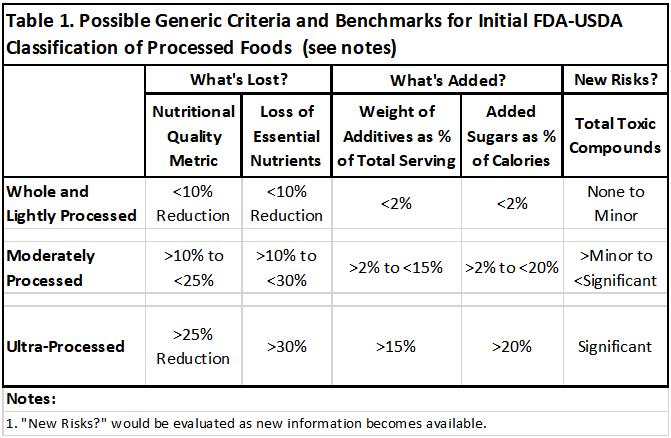
The criteria in Table 1 would markedly simplify the analytical challenges confronting the government. When a food product meets one or more of the criteria for placement in the UPF category, it would not be eligible for placement in the other two categories. For a food to be classified in the “Whole & Lightly Processed” category, it would need to meet all the criteria applicable to that category.
Given the preliminary and subjective basis of the thresholds in the table above, the government should put in place a process that allows food companies and interested parties to submit a request to alter the placement of specific foods in food processing categories. Such requests would include the data and justification in support of a requested shift.
Government review and responses to such requests will play a valuable role in vetting classification criteria and thresholds, and specific preliminary classification decisions. As part of such a process, the government should agree to review, and when warranted, update the classification of foods impacted by a change or clarification in the nuts and bolts of the classification system. Later in these comments, we return to the need for continuous review and improvements in the classification of food relative to the degree of processing.
2. Food Group Specific Criteria Needed in Classifying the Impacts of Processing
Some important characteristics and attributes of certain food products are relevant to only some food groups (e.g., oil extraction methods can have unique impacts on oil quality and safety, only certain plants produce meaningful levels of specific phytochemicals). The FDA-USDA will need to develop ways to deal with several food-group specific quality attributes. Such an approach is consistent with the way the government has addressed in the past the diversity of challenges in measuring and tracking food nutritional quality and safety.
In addition, the FDA carries out an important program through which proposed Qualified Health Claims (QHC) are vetted prior to approval, and incorporation in food labelling and advertising. QHCs are based upon differences in the levels of certain nutrients or compounds in a given branded food product, compared to widely sold competing products.
To gain approval for a qualified health claim, a food manufacturer must present the FDA with sufficient data supporting a positive public health outcome stemming from a change in product composition (e.g., improves bone health, lessened risk of heart disease). Such data and justification must be coupled with data supporting at least a 25% improvement in the level of the nutrient, or other compound in the food product, associated with the positive health outcome that is the focus of the QHC.
There will be some processed foods that meet one or more of the criteria leading to classification as a UPF, but which also can display a QHC. If the label for a processed food informed consumers that the product is a UPF and warrants a QHC, the mixed message will be confusing and undermine the goals of food- process labeling and the QHC program.
To avoid this problem, the FDA-USDA could take into account any QHCs associated with a processed food in determining whether the positive attributes of the food outweigh the negative ones.
By initially setting the threshold criteria so that only nearly whole foods fall in the “Whole & Lightly Processed” group, and only heavily processed products are placed in the UPF category, the FDA-USDA can assure that its initial and preliminary placement of foods will need to change in only a few cases as the underling metrics and criteria used to quantify the impact of food manufacturing evolve.
The forthcoming proposal from the government should also address how labelling on food packages relative to nutritional quality, degree of processing, and Qualified Health Claims can form a consistent and integrated message that accurately and fairly reflects the degree to which a product might contribute to, or undermine, attainment of public health goals.
C. Vetting the System to Achieve Continuous Improvement
Many factors will influence the FDA-USDA’s next steps in implementing a system to identify UPFs and lessen consumption of them. Efforts to do so are underway at all levels of government, and other initiatives will surely follow. The challenge for the country is assuring the collective efforts underway will motivate and facilitate positive changes in food quality, and not contribute to the already healthy level of disagreement and confusion over what foods are ultra-processed.
This section discusses possible steps and milestones to foster cohesive, collective action grounded in sound science. The FDA-USDA could strive to publish a proposed rule for identifying UPF by mid-2026. This rule would set forth the definitions, metrics, and criteria applicable to finished food products that land in each of the three groups used in these comments, or whatever groups the FDA-USDA propose.
A key component of the proposed rule would be tables by major food groups containing the government’s initial and preliminary classification decisions by type of food product.[11] Its publication would initiate a three to six-month review period during which a food company, nutritionist, professional society, commodity group, or research scientist could challenge the proposed classification of a brand name product or products.
The government could provide the public with a process to submit a petition at any time calling for a change in classification of a food product from its assigned group. The forthcoming, proposed rule would describe the process for submitting such petitions, the scientific information, and justification(s) that should be included. The proposed rule would also articulate the decision criteria the FDA-USDA will adhere to in determining whether to accept a recommended change in classification.
The proposed rule could also explain that the FDA-USDA will respond within 90 days to each such petition with acceptance, denial, or a request for further information. The government should also describe revisions and refinements in the criteria and decision rules applicable to finished food products, based on nuances and issues that arise in submitted petitions. A schedule like the one described above could result in an initial classification of most finished food products by the end of 2026.
The goal for FDA-USDA in 2027 could then be finalizing rules that specify how food nutritional quality and safety will be quantified and characterized in front-of-package food labels, and how the degree of processing will be determined and communicated via food labels. Implementing the new systems and labelling requirements would then be staged over the next approximately two years.
Mechanisms to Generate Better Data, Refine Metrics, and Support Better Decisions Must be Primary System Attributes
Concrete mechanisms through which new and better data, new science, and novel insights can be embedded in these systems will be essential system components. Such mechanisms must be built into the system, and not just an afterthought. Doing so will allow the government and broader community to routinely fine-tune computed values for core metrics, thereby supporting progressively more accurate classification decisions and labelling.
During 2026, the FDA-USDA should undertake the testing needed to calculate and disseminate nutritional quality, safety, and degree of processing metrics for a set of frequently consumed meals (e.g., fish and chips, pepperoni pizza, cheeseburger+fries+soda).
Likewise, government research agencies should carry out, and support via competitive grants, comprehensive testing to generate the data needed to calculate new metrics. In addition, teams of scientists not affiliated with food companies should receive government funding to apply food-processing classification criteria to daily dietary food intake patterns consistent with the Dietary Guidelines for Americans, Dietary Approaches to Stop Hypertension (DASH), low-carbohydrate, paleo, and Mediterranean diets, as well as common, unhealthy diets.
Generating needed data for meals and representative diets will require mixing and blending prior to laboratory testing for nutrient content and the presence of possibly risky contaminants. Such data will bring into reach new insights into the degree to which foods, meals, and diets commonly consumed in America are meeting nutritional needs. Over time epidemiologists can then assess the degree to which such dietary patterns are contributing to positive public health outcomes.
Openness to new information, and periodic requests for public input, will help assure the metrics, measurement systems, classification decisions, and the content of future food labelling are grounded in the best available information and science.
New data and insights will also lead to new ways to reward food companies that alter processing, recipes, and cooking methods in ways that make their brand-name products more nutritious and safer. Last, and critically, it will help improve public health and the quality of life, while also reducing healthcare expenditures.
IV. Questions Posed by the FDA-USDA
There are six specific questions in the July 25, 2025 Federal Register Notice published by FDA-USDA. Collectively, the questions ask for suggestions for the overall design of a system to support classification of processed foods, including a UPF category. The final sentence in question (6) asks:
“And what considerations should be taken into account in incorporating such a classification [of UPFs] in food and nutrition policies and programs?“
This question is of fundamental importance. It needs to be answered before the details, testing requirements, and algorithms in new nutritional quality and food processing systems can be designed, vetted, and refined.
Our response to this key question follows via six key points that will hopefully guide the FDA and USDA, stakeholders, and the research community as new metrics and methods to classify processed foods are developed, deployed, and relied on in studying impacts on public health outcomes.
A. Supporting Cohesive Research, Continuous Improvement, and Consistent Guidance to Consumers
Key Point #1 Meaningful steps are urgently needed, and should be taken while more complete information is obtained.
Important progress can be made quickly because there is little debate or uncertainty about how to classify mostly whole and lightly processed foods, as well as a significant portion of processed foods that meet most or all current definitions of UPF.
Significant analytical challenges and information gaps arise in processed food products that fall in between mostly whole & lightly processed and UPFs. Initially, the government and food industry should focus on shifting consumer choices from unarguably UPFs to mostly whole and lightly processed foods, and especially those foods that deliver significant total nutrients relative to their caloric content.
Key Point #2. As called for above, new metrics and measurement systems should drive research and be designed to routinely incorporate new and better information on the impacts of food quality on health outcomes. Lengthy rule-making processes to accommodate new information must become a thing of the past. How to assure this will happen is among the most important design challenges facing the FDA, USDA, and broader community.
We urge FDA-USDA to collaborate in the development of public databases on the levels of essential nutrients and other compounds in finished food products, as well as key food ingredients. Such data should be added to the existing, valuable “FoodData Central” accessible via the National Agricultural Library.[12]
Key Point #3. In defining and measuring food nutritional quality and the impacts of processing, emphasis should be placed where there is strong evidence of likely positive or negative impacts on public health.
There are many such opportunities encompassing around one-third of daily caloric intake, and we see no reason to delay taking advantage of them.
Key Point #4. The metrics, measures, and criteria governing classification of the degree of processing in finished food products will differ across two primary applications: (1) support for labeling on food packaging and messaging to consumers, and (2) in conducting research that explores, characterizes, and quantifies the impacts of food and dietary choices, and UPFs, on public health outcomes.
Asking a single system to support food product labeling innovations, while also advancing research on food-public health associations, will result in a system that falls short in meeting both needs.
The diversity of analytical challenges that lie ahead will necessitate a variety of new testing, metrics, and measurement systems. In the forthcoming proposed rule, the FDA-USDA should acknowledge these differences, and commit to developing distinct systems that are grounded in the same core attributes of food and that rely on the same, or similar, laboratory measurements.
Key Point # 5. New metrics and measurement systems should focus on a single serving of finished food products. Quantitative data should be generated on the finished product itself, rather than via aggregation of characteristics and attributes of the ingredients required to produce a serving of food.
Such an approach will mark a significant, and we believe necessary, deviation from the NOVA and most other existing classification systems.
This approach will also align new information on food processing and recipes with the information already gathered and reported to consumers via Nutrition Fact Panels. It will enhance the ability of the FDA and USDA, and the food industry, to align and leverage consumer-facing information in ways that support clear and more consistent messaging.
As noted above, a critical challenge warrants special focus – aligning forthcoming FDA-required front-of-package nutrition information[13], as well as FDA-approved qualified health claims, with degree of processing classification and information.
A simple example — significant added sugar in a finished food product will surely impact front-of-pack nutrition labelling content, but also will be a factor in delineating the impacts of recipes and food processing, and hence identification of UPFs. Assuring that nutrition labelling and processing labelling is consistent and cohesive must be a high priority as the FDA-USDA move forward.
Just counting the calories from added sugar is no longer enough to address well-understood food quality-public health outcomes. This point is driven home in the August, 2025 citizen’s petition submitted to the FDA by Dr. David Kessler. The petition challenges the GRAS status of a number of refined-carbohydrate sources of added sugar. It explains the science supporting the need to take account of the source of added sugar, and associated impacts on glucose availability and insulin responses.
Key Point #6. New methods to classify food in terms of nutritional quality and the impacts of food manufacturing are two of three interconnected legs of the stool supporting improvements in public health outcomes. The third essential leg is consumer education.
Clear and consistent messaging from the food industry, all levels of government, health care providers, and influencers are needed to promote consumer understanding and trust in new, nutrition- and processing-focused food labeling and related education materials. Bringing about such consistency in messaging in today’s information ecosystems will require government agencies to be active and assertive.
B. Responses to Questions 1-5 Posed by the FDA-USDA
The July 25, 2025 Federal Notice seeking comments on the classification of UPFs poses 6 questions. Here we respond to questions 1-5; questions as stated in the FR notice are in quotes or paraphrased.
Question (1)
“What, if any, existing classification systems or policies should we consider in determining UPFs?”
The NOVA system is the most widely used. Its strengths and weaknesses have been discussed in multiple published papers.[14] Like all systems, NOVA accurately distinguishes between fresh and mostly whole foods and UPFs laden with added fat, sugar, and/or salt. But it does not properly classify some healthy UPFs, nor does it lead to continuous scores that can be used to approximate the healthfulness of one processed food compared to others.
The FDA-USDA should extract from published literature, and from the expected responses to the July 25th Federal Register notice, the ways that existing systems sometimes lead to indefensible classification decisions. By analyzing why existing systems sometimes lead to erroneous classifications, the FDA and USDA will gain insights into how the system they design will need to differ from existing systems.
One point warrants emphasis. For any new system to drive constructive change in the nutritional quality and safety of the U.S. food supply, it must motivate food companies to alter recipes and processing methods to improve the healthfulness of their products. Food manufacturers will be competing with other brands, some of which will seek to gain market share via processing and recipe changes that enhance nutritional quality and/or reduce negative impacts of food manufacturing (e.g., reducing caloric density, avoiding possibly risky additives and high-glycemic sources of refined carbohydrates).
But for this dynamic to play out, the government’s new system, and associated labelling, must be mandatory, data-driven, and actionable (i.e. presented in a way that makes it is easy for consumers to understand differences across products as they move down an aisle of a grocery store).
The FDA and USDA will likely face pressure to not advance such a system from some companies and stakeholders. In proposing a path forward, the government must find ways to assure and retain fairness, clarity, solid grounding in science, and the ability to motivate change.
Question (2)
Multiple questions are posed about how ingredients are currently listed on food packaging, and possible changes in the terminology used to describe ingredients in a manufactured food product.
(2) a. “What types of ingredients (e.g., ingredients that may share a similar composition, function, or purpose) might be used to characterize a food as ultra-processed?”
This is an important question. Ingredient lists can and should be augmented to provide consumers more information that is organized in ways to advance key messaging. Such changes will support clearer communication of why certain food products are classified as UPFs, and others are not.
FDA-USDA must seek a balance between the amount of information conveyed via ingredient lists and other labelling content, versus the clarity and ease of understanding of the information that is conveyed.
We recommend that for ingredients that share common characteristics and/or serve similar purposes, the FDA-USDA list them as a group, or category of ingredients in a product’s ingredient list. For example, the following groups could become part of updated labels:
- Added sugars (including HFCS),
- Non-nutritive sweeteners,
- Added fats and cooking oils (especially those with “refined” on the label),
- Synthetic preservatives,
- Added nutrients,
- Colors (natural and synthetic), and
- Other additives.
The total amount of ingredients in each of the above the categories in a finished food product could be listed as a percentage of the product’s total weight. Such totals would be followed by the individual ingredients within the category, and their percentage by weight in the product (not the category).
A hypothetical example appears in Table 2 drawing on the Nutrition Facts Panel for Honey Nut Cheerios (General Mills).

Note that the “Alternative Ingredients List” contains information relied upon in the recommended system for classifying a finished food product in terms of the impacts of food manufacturing. The percentage by weight of “Raw Food Ingredients” in the finished product is a key parameter; the lower this percentage, the more likely a product will be classified as an UPF.
In the “Added Sugars” category, the contribution of refined carbohydrates, sugars, and starch that more rapidly increase glucose levels is delineated. The reasons for doing so are articulated in Dr. Kessler’s citizen’s petition to the FDA on the GRAS status of refined carbohydrates.
Cooking oils are all UPFs because their extraction entails the loss of essentially all vitamins, protein, and fiber. The impacts of cooking oils on a specific processed food should be evaluated based on the profile of fatty acids in the finished food product, coupled with what else might be in the final product on account of the choice of cooking oils (e.g., AGEs).
Unbalanced intake of essential omega-6 and omega-3 polyunsaturated fatty acids (PUFAs) can alter health outcomes. The primary omega-6 FA in the US diet is linoleic acid, while the primary omega-3 FA is alpha-linolenic acid. Corn, soybean, and safflower cooking oils, and foods from animals fed rations high in corn, soy and other grain concentrates, are the major sources of omega-6 FAs in the U.S. diet. The primary sources of omega-3s are milk, eggs, meat from grass- and forage-fed livestock, edible beans, some other oils, and fatty fish.
Excessive intakes of pro-inflammatory omega-6 fatty acids relative to inhibitory FAs incrementally heighten risk of a number of health problems rooted in oxidative stress and disrupted cell signaling. These include heart disease, GI tract problems, Alzheimer’s disease, and cancer via mTOR complex 1 (mTORC1). The mechanisms leading to many such adverse health outcomes entail production of 4-HNE adducts that impair the stability of human DNA and are associated with cancer hotspots.
Most studies point to an omega-6 to omega-3 ratio of less than 4:1 as likely heart-health neutral, while ratios under 2:1 are regarded as optimal. Many UPFs are high in omega-6 and low in omega-3 FAs, and are among the reasons most Americans are consuming excessive amounts of omega-6 FAs (i.e., as high as 50:1 in some populations). Such dietary patterns increase cancer risk via overstimulation of cancer cell growth, and can advance chronic diseases rooted in inflammation driven by oxidative stress.
For this reason, and in the case of foods that contain PUFAs, fatty acid profiles could be among the criteria relied upon in quantifying the impacts of food manufacturing on public health outcomes. Any processed food with an omega-6:omega-3 ratio in excess of some threshold (e.g., 10:1) could be regarded as an UPF, while foods with greater than 4:1 omega-6:omega-3 FAs, but less than 10:1, could be classified as “Moderately Processed”.
Initially, the FDA-USDA should explore basing the PUFA ratio in food products on the levels of omega-6 linoleic acid to alpha-linolenic omega-3 FA, since these two FAs account for the majority of each category of PUFA. This approach would lower testing costs. In addition, the government could exempt processed foods from fatty-acid profile testing if the combined PUFAs in a serving of food account for some minimal amount of the calories (e.g., <5%).
(2) b. “How should minor ingredients be handled (e.g., those that account for <2% of a product’s weight)?”
We recommend that the “<2%” weight threshold should no longer solely determine which ingredients must be listed on product labels.
To avoid excessively long ingredients lists, a “Minor Ingredients” category could combine, but not name, all ingredients present at less than 0.5% by weight. Such a “Minor Ingredient” category would report the aggregate amount of such ingredients as a percent of the product’s dry weight. The GRAS status of an ingredient could also be taken into account in determining whether an ingredient can be included in the “Minor Ingredient” category.
A list of common minor ingredients should be available on FDA and USDA websites, and include information of the intended purpose or function of each ingredient, and any possible adverse impacts.
On the question of whether artificial and natural colors should be broken out, doing so would hopefully accelerate the shift away from artificial colors.
(2) c. “Should the relative amounts of an ingredient in a food product influence whether the product should be classified as UPF?”
Yes. Amounts have to be taken into account for the FDA-USDA to advance a credible system for classifying the degree of processing. The amounts of each raw food, or added ingredient, is essential in estimating the overall public health impacts of a given processed food product.
If the FDA-USDA were to drop the requirement to report the amounts of specific nutrients, a food company could argue that the amount and percentage of added sugars, or artificial colors, do not have to be displayed. This would be a major step backward.
(2) d. “What, if any, other ingredients or ingredient-related criteria not discussed previously [in the FR notice] should or should not be used to characterize a food as ultra-processed?”
The answer to this key question will evolve over time to encompass additional ingredients, and ingredient-related criteria, applicable to different food groups. Here, we focus on ingredients and measurement system components that the FDA-USDA should, and should not include at initial launch of a system to delineate UPFs.
- Ingredients to Include and Address as a Category
Each of the five categories of nutrients below warrants careful consideration in classifying food as ultra-processed. Each will be important in only some food groups. Five initial categories could include:
- Refined carbohydrates.
- Oils and fats used for cooking and included in dressings and sauces.
- Fatty acids.
- Phytochemicals.
- Toxic compounds that can enter the food supply as a contaminant in an ingredient, or be formed during milling, extraction, processing, and cooking.
Refined Carbohydrates. For reasons explained in the Kessler refined carbohydrate-GRAS petition, refined carbohydrates as a class of ingredients must be addressed in the classification of UPFs. The FDA has a statutory obligation to respond to the Kessler petition within 180 days, well before the FDA-USDA will post a proposed UPF rule and request public comments.
While the Kessler petition is focused just on the GRAS status of refined carbohydrates, the issues it raises are critically important in classifying UPFs. One possible “next step” for the FDA would be to request public comment on the Kessler petition and GRAS-related issues. But it makes no sense for the FDA to respond to the Kessler petition as if it has no relevance to the outcome of how the government defines and classifies UPFs.
The challenges confronting the government in addressing refined carbohydrates are made more complex because food milling, extraction, fractionation, mixing, and cooking processes alter not just the number of calories stemming from the presence of a refined carbohydrate in a food product, but also the inherent properties of the calories in terms of public health outcomes.
Extrusion processes, in particular, tend to break down the food matrix, thereby altering the chemical form of the carbohydrates in many foods. This can transform “complex” carbohydrates that are absorbed more slowly, into simple carbohydrates that are rapidly absorbed, leading to spikes in glucose, insulin resistance, liver damage, and heightened risk of Type 2 diabetes.
The impacts of extrusion technology on bioactive compounds, fiber, glucose, and nutrient bioavailability will be critical issues with grain-based products, as well as many oils and fats.
Oils. The oil extraction process removes nearly all the vitamins, and all of the minerals, protein, and fiber in the seeds, or other vegetative source of extracted oil. Hence, plant-based oils would be UPF ingredients based just on the “What’s Lost?” criterion.
In the context of identifying UPFs, oil quality and safety metrics should be applied to finished food products that contain oils, not the oils by themselves.[15]
Whether the use of an extracted oil in cooking, or in a sauce, renders a finished product an UPF will depend largely on the contribution of oil to caloric content. As experience is gained in identifying the public-health-relevant properties of oil products, the government should require specific testing to support nutrition and food processing labelling, and to advance epidemiological research.
Fatty Acids. Animal products have accounted for about 30% of average daily caloric intake since year 2000 across the U.S. population. The public health impacts arising from the nutrients in animal products, and especially the mix of fatty acids, are significant, but have also been hard to quantify. They have also been subject to considerable controversy.
In general, a serving of processed meat is more likely to lead to adverse health outcomes than a serving of similar, but unprocessed animal product.
Over the last half-century, incrementally more sophisticated and larger studies have highlighted differences in fat quality, in contrast to total fat content, in linking fat intake to adverse health outcomes.
The ways that the government, food industry, farmers and ranchers, and the public-health community evaluate fatty acid profiles in animal-based products will need to differ from the way most plant-based food ingredients are addressed.
This is because what animals eat has a dramatic impact on fatty acid profiles. Hundreds of high-quality studies conducted in multiple countries show that fatty acid profiles in nearly all animal products shift dramatically, and consistently, as a function of what farm animals, or farmed fish, are fed. The omega-6:omega-3 ratio in animal-derived food products typically falls between 1:1 and 1:4 when animals are fed ~100% forage-based feeds (i.e. grasses and legume pasture, or harvested forages). When animals are fed mostly corn, soybean, and other grain-based feeds that are high in omega-6s and low in omega-3s, the ratio rises toward 7:1, and often higher.
Dairy cows on a 100% grass and forage-based diet produce milk with an omega-6:omega-3 ratio close to ideal for heart health, and with lower levels of pro-inflammatory saturated fatty acids. The fat from beef cattle finished on grass and forage-based rations likewise contains a heart-healthy mix of polyunsaturated fatty acids, in sharp contrast to grain and concentrate-finished beef.
Multiple things are done to processed foods and meals, including animal products, that entail separating out the fat in animal products, processing and altering it in some ways, and turning it into a diversity of intermediate products and ingredients (e.g., butter, cream, cheese, yogurt, tallow). Such impacts and outcomes are part of food processing and manufacturing, and hence part of determining whether a finished food product, or a meal, warrants classification as an UPF.
For these reasons, and because the fatty acid profile in animal products and processed foods generally receive less attention than carbohydrates, the government should make a concerted effort to thoughtfully address impacts of food processing, and the other factors discussed above, on fatty acid profiles.
Published studies and government agencies have identified an omega-6:omega-3 ratio of 4:1 or less as heart-healthy, or at least neutral in terms of cardiometabolic health. This ratio is as an appropriate benchmark to delineate animal products with probably healthy or neutral polyunsaturated fatty acid profiles. Any processed food sold to consumers that contains an omega-6:omega-3 ratio over 7-8:1 could initially be regarded as an UPF, if its total PUFA content accounts for some minimal percentage of total calories in the finished food product.[16]
Animal husbandry and feed rations also impact saturated fatty acid profiles. Scientific understanding of how animal management and breeding alters saturated fatty acid profiles requires more research. But recent moderation of concern over the associations between overall saturated fat intakes and adverse health outcomes are welcomed and consistent with contemporary science.
Phytochemicals. The government has established recommended intakes for no more than a few dozen of the 150,000-plus phytochemicals produced by food crops[17]. The “Periodic Table of Food” project sponsored by the Rockefeller Foundation is striving to characterize thousands more. As progress is made, it is certain additional phytochemicals will be discovered that contribute to positive public health outcomes, and no doubt a few others with detrimental impacts, or both.[18]
One of the most important contributions plant phytochemicals make is their capacity to neutralize reactive oxygen species (ROS), compounds often referred to as “free radicals”. Throughout life, such compounds are produced continuously by cells via normal metabolic processes, and in particular, when food energy is transformed by mitochondria into the form that powers muscles and supports human physiology.
But the body sometimes over-produces ROS, leading to oxidative stress that can damage cell walls, disrupt signaling within the body, impact DNA integrity, and promote inflammation. Oxidative stress is one of the most common triggers for ill-health. It heightens the risk of cancer, reproductive problems, dementia, and a host of other adverse health outcomes. Plus, exposure to a wide diversity of chemicals, including many pesticides and food additives, heavy metals, and pathogens, can trigger oxidative stress.
The human body produces endogenous antioxidants that neutralize reactive oxygen species, thereby avoiding or minimizing adverse health impacts. But as people age, the body becomes incrementally less efficient in producing endogenous antioxidants. This is why the elderly become progressively more dependent on food in combating oxidative stress.
It is also why quantifying the total antioxidant potential of different foods is important in assessing food nutritional quality, as well as the impacts of food processing, recipes, and cooking methods.
A vast array of phytochemicals are present in food when harvested on the farm. From initial storage through remaining stages along food value chains, changes can occur in the phytochemicals in fruits, vegetables, nuts, and grains. These changes need to be taken into account in determining whether a food is ultra-processed.
A variety of analytical methods have been developed to estimate total antioxidant activity in various foods. None captures all the beneficial impacts of all phytochemicals, but several capture a significant share, and especially in particular types of food and food matrices.[19]
Accordingly, the FDA-USDA should specify the acceptable method, or methods, that can be used to quantify total antioxidant activity of the nutrients and phytochemicals in different types of foods and/or in different food matrices. Such methods will also reflect, at least to some degree, the impact of processing on as-yet uncharacterized antioxidant and other health-promoting phytochemicals.
The ideal way to quantify the collective impacts of food manufacturing on oxidative stress would be to: (1) measure the total antioxidant capacity exerted by the amount of raw food ingredients required to make a serving of a processed food, (2) measure the total antioxidant capacity in one serving of a processed food, (3) subtract the result in (2) from (1), and (4) express the difference as percent of the result in step (1).
Such an estimate of the impact of food manufacturing on total antioxidant capacity could then be used as a parameter in arraying the impacts of food manufacturing along a continuum. However, the available — and economically practical — testing methods required to make such calculations will have to be reviewed and vetted. It is likely that for some food groups, new methods and metrics will be needed.
The FDA-USDA should also take into account the contribution of food additives and fortification to total antioxidant activity in a finished processed food product. Food companies should be required to generate and submit to the FDA-USDA the data required to estimate the impact of processing and manufacturing on the total antioxidant activity of a finished food product with, and without, the contribution of additives and fortification.
Toxic Compounds. Estimating risks arising from the presence of possibly toxic compounds in food is challenging. It will require the generation of considerable new data and new risk assessment methods.
But it is also too important to ignore, and thus we urge the government to draw upon current science and testing data to address and eliminate, or at least markedly reduce, such risks from the food supply.
We suggest two priorities for initial consideration.
#1. Oil Extraction and Food Fractionization. Some processing technologies and methods do more than alter the form of food and the nutritional quality of the fractions into which a whole food is broken into. The process of “breaking” food apart requires combinations of physical force, elevated temperatures, and chemical treatments.
In some cases, a combination of such forces can trigger the creation of toxic contaminants and impurities that pose food safety risks. Over time, the government should develop, vet, and refine methods to incorporate such toxic compounds in the algorithms used to quantify the impacts of food manufacturing on food nutritional quality and safety.
The FDA-USDA should make clear to the food industry that potentially toxic compounds in processed foods are going to be studied more closely, and when warranted, regulated. In response, food companies will hopefully do the testing needed to confirm the presence or absence of such compounds in their brand-name products. When present, companies can then take steps to reduce or eliminate them, and hopefully will do so without the need for further actions by government regulators.
#2. Post-harvest Applications of Pesticides. In the 1960s and 1970s, residues of insecticides in food accounted for the majority of pesticide-related food safety risks. In the 1980s through the 2000s, the rise in herbicide use, especially those applied late in the crop season and on GMO, herbicide-tolerant crops, came to account for a larger share of overall dietary exposure to pesticides.
This was also a period of some reductions in risks arising from insecticides as the last major uses of organochlorine insecticides were phased out, and as the combination of resistance and regulation reduced reliance on high-risk organophosphate and carbamate insecticides.
Since about 2010, post-harvest fungicide applications have become increasingly common and have come to account for a much larger share of overall pesticide dietary risk. Such applications are made in crop storage, shipping, and food packing plants, and now eclipse the risks arising from herbicide residues in food. In a few foods, residues from post-harvest fungicide applications now exceed insecticide residues and risks.[20] Such residues and risks warrant monitoring, especially in cases in which residue levels are increased in food products as a result of processing methods and food form.
- Ingredient-Related Issues That Should Not Be Current Priorities for Assessment in Identifying UPFs
The FDA-USDA should not strive to quantify the impact of regenerative, organic, sustainable, GMO-based, or other production systems on classification of the impacts of food processing. Such impacts can be significant, especially over time and in response to changes in soil health, but are challenging to quantify and isolate from other factors that can also alter nutrient profiles.
To some extent, the impacts of changes in soil health on crop nutritional quality will be accounted for to the degree nutrient density is included in the core measure of nutritional quality and the impacts of processing. For example, most organic fresh fruits contain 10% to 20% higher levels of total antioxidant activity, a nutritional quality benefit that can and should be reflected in nutritional quality scores.
One category of exceptions may arise in the years ahead as new genetically-modified crop cultivars reach the market. Some GMO crops are being modified to produce essential, health promoting nutrients, but may do so in an altered form that might be more or less bioavailable (e.g., Golden rice and Vitamin A). Such changes need to be taken into account in assessing the substantial equivalence and safety of the engineered crop.
In addition, GE transformation sometimes triggers pleiotropic effects within a crop’s genome that, in turn, alter the expression of genes other than those that are the target of the transformation process. Such generally unintended, and sometimes undetected alterations can introduce new toxic impurities or compounds into the animal or human food supply. Whether and how to incorporate such changes will need to be discussed and resolved over time. Such differences are analogous to changes in nutrient levels and safety when processing methods change food matrices, and for example, render the glucose in a carbohydrate more quickly available.
Plant-based meat, dairy, egg, and fish substitutes are inherently UPFs under any conceivable definition. But key questions will arise over whether plant-based alternatives are nutritionally equivalent, deficient, or superior. In addition, substantial shares of such nutrients are present in plant-based alternatives from fortification, as opposed to originating in raw agricultural ingredients.
Likewise, because of the substantial differences in the industrial processes through which pant-based alternatives are manufactured, and the feedstocks used, such products may sometimes become contaminated with bacterial or viral pathogens, impurities from feedstocks, chemical leaching from processing equipment, or other unintended compounds. For this reason, special attention may be needed to detect, quantify, and address novel food safety risks in plant-based alternatives.
In particular, adverse outcomes are sometimes associated with bioengineered microorganisms that are grown out in industrial-scale fermentation vats. These may include the presence of unexpected substances in the finished products. For example, in its official GRAS filing, Impossible Foods disclosed “46 unexpected proteins” in its artificial heme.[21]
Similarly, a non-targeted mass-spectrometry analysis of synbio-milk protein produced using fermentation and bioengineered yeast discovered two unexpected attributes. First, the gene-edited yeast generated 85% fungal protein and only 15% bovine protein. The fungal proteins are largely unstudied and remain undisclosed in marketing and product labels. Second, over 90 other substances identified in this product are as yet unknown to science. In the context of the FDA-USDA classification of UPFs, the use of genetically engineered organisms to create specific food ingredients and processing aids should be regarded as de facto UPF, and should also receive close attention in terms of food safety and nutritional equivalence.
Of note, progress has been made in the voluntary phase out of many uses of petroleum-derived food colors. This process has been accompanied by the emergence of alternative food color products (see an Impossible Foods example generated using synthetic biology). The FDA has allowed Impossible Foods to formulate its meat products with an artificial color product derived from synthetic biology, and multiple patents have been filed describing the production of other colors and flavors using this technology. Work is progressing in developing methods to produce and extract a wide range of industrial food-processing aids and additives from corn steep liquor, which is now often managed as a waste product stemming from current industrial uses of corn. All such additives should also be regarded as ultra-processed.
The ways that consumers store and handle food, cook dishes, garnish foods, and plan and prepare meals can have substantial impacts – both positive and negative– on the nutritional quality of meals and impacts of food processing on health outcomes.
Such impacts occur independent of steps taken by food companies to manufacture and sell healthy products. Given the many challenges facing food companies and the FDA-USDA in classifying processed foods, we recommend that evaluating the impacts of what consumers do with purchased food products should be addressed independently of the current effort to identify and classify processed foods.
Question (3)
Multi-part question addressing “…the processing of an ingredient or a mixture of ingredients into the finished food and whether certain processing methods may contribute to a food being considered ultra-processed.”
(3) a. “…What physical processes might be used to characterize a food as ultra-processed?”
Any physical process should be regarded as relevant in delineating UPFs if the process:
- Alters the nutrient concentrations in the finished food products (e.g., milling, oil extraction),
- Renders the glucose in a finished product more quickly bioavailable, or
- Can create new, potentially toxic compounds (e.g., AGEs, acrylamide).
The milling of grain is a key physical process that, as discussed previously, has many impacts on food nutritional quality and safety. Milling should not, by itself, render a grain-based food an UPF (e.g., when raw grains are ground and used in baking without removing any part of the kernel).
Bread, muffins, donuts, cookies, bagels, and other baked, grain-based products can be manufactured, or prepared at home or in restaurants, in a myriad of ways that have complex implications for both the form of nutrients in the final product and nutrient concentrations. The only feasible way to take account of all such impacts is to test baked products as sold to consumers. Nutrient composition testing will reflect some, but surely not all, of the impacts baking methods and ingredient sources.
(3) b. “… What biological processes might be used to characterize a food as ultra-processed?”
Any food grown in an industrial-scale fermentation tank using microorganisms, whether genetically engineered or not, should be regarded as an UPF. As the case with plant-based foods, the key issues of concern to consumers and the public health community will be nutritional quality, and the presence or absence of existing or new food safety risks. In addition, any product containing ingredients produced by industrial-scale fermentation should also be regarded as an UPF.
Natural fermentation is another widely applied processing technique that can alter food nutritional quality in multiple ways (e.g., kimchi, sourcrout, and some pickles). When fermentation increases the level or bioavailability of an essential nutrient in finished food product, that outcome should be reflected in the nutritional quality score. Just as the case with physical measures that alter food forms, fermentation may change the presence and concentrations of toxic impurities or compounds, and such changes should be taken into account to the extent possible.
Natural fermentation can also lead to benefits in terms of nutrient content, preservation, and flavor. These benefits will be reflected, to some degree, through the absence of food additives and nutritional fortification.
(3) c. “… What chemical processes might be used to characterize a food as ultra-processed?”
It will be challenging for FDA and USDA to list, evaluate, and take account of all “chemical processes”. Many physical, biological, mixing, and cooking processes used in food manufacturing impact the chemical composition of food ingredients and/or finished food products. Are such methods considered a “chemical process” if they bring about changes in chemical composition?
Based on existing law and policy, when a chemical is used in the process of manufacturing a food ingredient, or a finished food product, it should be treated as a food additive if a measurable level of the chemical remains in the finished food product. The presence of such a chemical must also meet the “reasonable certainty of no harm” standard in federal food law.
(3)d. “What, if any, other processing-related techniques should or should not be used to characterize a food as ultra-processed?”
We suggest that the FDA-USDA compile a list of existing methods and technologies, and provide a generic description of their purpose and impacts on food nutritional quality, and presence of any possibly risky contaminants. As systems to classify nutritional quality and the degree of processing evolve, additional processing techniques will surface that warrant FDA-USDA attention.
Question (4)
Is “ultra-processed” the best term to use?
The term “ultra-processed” connotes a significant degree of processing. The way “ultra-processed” has been used for over a decade also suggests that an UPF has often negative consequences in terms of public health outcomes.
There is no perfect term that can fully encompass the impacts of food processing. The use of the term “ultra-processed” can be applied to foods that are heavily processed, but nonetheless highly nutritious and safe. Taken together, we feel that the FDA-USDA should continue to use the term “ultra-processed”, and should invest considerable effort in assuring consumers understand what makes a product an UPF, and why some UPFs are both safe and desirable in healthy diets.
Question (5)
This two-part question probes how ongoing research on food nutritional quality and processing should impact how UPFs are identified, measured, and labelled.
(5) a. “… should nutritional composition or the presence of certain nutrients be incorporated in the definition of UPFs?”
The answer is “Yes” and “Yes”. The FDA-USDA should take account of the concentrations of essential, health-promoting nutrients in processed foods that originate from the raw agricultural ingredients. It is also important to place heavy weight on nutritional quality relative to caloric density, such as the core metric recommended in these comments, as well as in HHRA’s earlier comments on FDA food labelling , the definition of “healthy” food, and the NuCal system for quantifying nutritional quality.
(5)b. “What other attributes, such as energy density or palatability, might be used to characterize a food as ultra-processed?”
As explained throughout these comments, the single most important nutritional attribute of a food product is the degree to which a serving satisfies a person’s essential nutrient needs relative to the space the serving takes up in the individual’s daily caloric intake. Healthier foods deliver far more nutrients per calorie than other foods, and junk food delivers few, if any, nutrients, despite substantial caloric intakes and/or the presence of artificial sweeteners.
The impacts of food manufacturing on this key nutritional quality metric must be part of any meaningful classification system. We have recommended one set of metrics to do so. Other options will no doubt be advanced in this public comment period. The FDA-USDA must choose among the options suggested and devise a system that is practical, affordable, adaptable, and designed to promote positive public health outcomes.
Flavor, mouth feel, and palatability are inherently subjective attributes in food products. The FDA-USDA should not strive to measure them, or otherwise include them in its classification of UPFs. It should, however, consider the additives that are included in recipes in order to bring about a given flavor profile, mouth feel, or product stability.
V. Conclusions and Recommendations
Current science strongly supports four conclusions linking UPFs to adverse health outcomes, and these conclusions lead directly to simple, direct advice for consumers:
- Eat more fresh, whole, and lightly processed foods,
- Avoid foods in which a substantial share of the ingredients have been markedly altered from their raw form, thereby changing the food matrix and how the body responds to the glucose, fat, and other nutrients and chemicals in the food,
- Seek out foods grown in healthy soils, and healthy farming and animal management systems that are most likely to contain ample levels of health-promoting nutrients and phytochemicals, and least likely to pose food safety risks, and
- Work towards balance and diversity in daily food choices (i.e. ingest a “rainbow” of colors), and consume smaller portions and avoid overconsumption.
To make real progress, the FDA-USDA must forge consensus on better definitions, metrics, and measurement systems to help guide consumers seeking to improve health outcomes via changes in dietary patterns.
As long as new labeling requirements are meaningful and mandatory, it is likely that enough consumers will draw upon them in changing purchase decisions to reward companies manufacturing healthier products. Once such shifts in purchase patterns emerge, the stage will be set for long-overdue changes in what we eat in America.
In light of unfolding epidemics of disease and other adverse health outcomes grounded in food quality and safety, new metrics and labelling systems should be developed and deployed as quickly as possible. The previously cited letter to Nature Medicine supports the need for timely progress:
“Delaying the recognition of addiction to ultra-processed food in pursuit of the perfect taxonomy is unnecessary and inconsistent with the treatment of other SUDs [substance-use disorders]”.
All measurement systems, consumer-facing information and labelling should focus on a single serving of food, as currently the case with “per serving” information provided via “Nutrition Facts” panels.[22]
The FDA-USDA and food industry should place a high priority on generating, compiling, and making widely available the information on brand-name food products required to generate comprehensive food nutritional and safety profiles. Such data should be made available on all widely sold brand-name food products within two years, with priority placed on foods manufactured for infants and children.
The FDA, USDA, and government agencies at all levels, should recognize that developing and deploying new systems to quantify food nutritional quality, safety, and the impacts of processing is a challenge that will require systematic effort over many years. Methods for tracking progress will play a key role in guiding continuous improvement, and should include metrics such as:
- The average number of daily servings of food per capita that have shifted from the unhealthy UPF category into the “Moderately Processed” and “Whole & lightly Processed” categories, and
- Progress moving daily servings within the UPF category toward the minimum threshold required to move into the “Moderate” category, and daily servings in the “Moderate” category closer to “Whole & Lightly Processed” foods.
Government systems designed to make both quantitative and qualitative judgements about a food product’s nutritional quality and safety often take far too long to put in place, and once in place, too long to change when new and reliable information becomes available.[23] This needs to change.
As part of announcing new analytical systems and food labelling requirements, the FDA-USDA should describe a routine, annual process through which aspects of all such systems will be open for review, comment, and continuous improvement. Such routine cycles of assessment will accelerate investments in the components of new systems that are working as hoped, while also pursuing better ways to address issues or aspects of the systems that are not working as intended.
Unique needs exist in supporting the design and operationalization of food-as-medicine programs, and should be accommodated to the full extent possible by the FDA and USDA. Current steps to curtail nutrition education via the SNAP program, and other cuts in food assistance and healthcare delivery, could slow the pace of food-as-medicine program implementation and enhancement.
Tufts University scientists have highlighted the “urgent need” to take advantage of synergy in achieving public health goals through the integration of food-as- medicine efforts and USDA programs focused on enhancing soil health and promoting regenerative agricultural systems. Toward this end, clearer articulation is needed of how to measure soil health and identify regenerative systems.
More federal funding will be required to help farmers and ranchers experiment with innovative systems, and then scale-up those that prove effective and profitable.
Several states are pursuing legislation addressing UPFs. The FDA and USDA need to foster harmonization of state and federal efforts seeking comparable food quality and public health goals. Doing so will require the finalization of the ongoing, FDA food nutritional quality rulemaking, and moving toward closure with a rule-making defining UPFs.
Insights from the new metrics and measurement systems that the FDA-USDA will develop should be taken into account in the criteria and decision-processes governing how SNAP, school lunch, Women, Infants and Children, Veterans Administration, and other government food-assistance programs are implemented.
The government should support the estimation of healthy food premiums for inclusion in food-product pricing and purchase decisions. Such premiums should reflect the government’s best, current effort at monetizing the expected reduction in future health care costs, as well as the increase in economic activity stemming from reduced and delayed morbidity, and longer life and work spans.
References
Abar L, Steele EM, Lee SK, Kahle L, Moore SC, Watts E, O’Connell CP, Matthews CE, Herrick KA, Hall KD, O’Connor LE, Freedman ND, Sinha R, Hong HG, Loftfield E. Identification and validation of poly-metabolite scores for diets high in ultra-processed food: An observational study and post-hoc randomized controlled crossover-feeding trial. PLoS Med. 2025 May 20;22(5):e1004560. doi: 10.1371/journal.pmed.1004560. PMID: 40392756; PMCID: PMC12091781.
Albin, Jaclyn, Willis Wong, MD, MBA, MS, Milette Siler, MBA-HC, RDN, LD, CCMS, Michael E. Bowen, MD, MPH, MSCS, and Heather Kitzman. A Novel Culinary Medicine Service Line: Practical Strategy for Food as Medicine. NEJM Catal Innov Care Deliv 2025;6(9). DOI: 10.1056/CAT.24.0347.
Amos O. Anim, Herman Erick Lutterodt, Caleb William Ofori, Ivy Oduro-Boateng, Justina Achiaa Bonsu, Gloria M. Ankar-Brewoo, Linda Nana Esi Aduku, Charles Apprey, Reginald Adjetey Annan, The impact of agricultural practices on food composition – A systematic review,
Journal of Food Composition and Analysis, Volume 148, Part 3, 2025, 108388, ISSN 0889-1575,
https://doi.org/10.1016/j.jfca.2025.108388.
Barański M, Średnicka-Tober D, Volakakis N, et al. Higher antioxidant and lower cadmium concentrations and lower incidence of pesticide residues in organically grown crops: a systematic literature review and meta-analyses. British Journal of Nutrition. 2014;112(5):794-811. doi:10.1017/S0007114514001366
Baric A, Malik VS, Christoforou A. Ultra-processed food consumption and cardiometabolic risk in Canada: a cross-sectional analysis of the Canadian health measures survey. Nutr Metab (Lond). 2025 May 7;22(1):37. doi: 10.1186/s12986-025-00935-y. PMID: 40336022; PMCID: PMC12060383.
Benbrook CM, Davis DR, Heins BJ, Latif MA, Leifert C, Peterman L, Butler G, Faergeman O, Abel-Caines S, Baranski M. Enhancing the fatty acid profile of milk through forage-based rations, with nutrition modeling of diet outcomes. Food Sci Nutr. 2018 Feb 28;6(3):681-700. doi: 10.1002/fsn3.610. PMID: 29876120; PMCID: PMC5980250.
Błaszczyk E, Karwowski BT. Biochemical Battle: Influence of Omega-6 Fatty Acids on the Formation of DNA Adducts with 4-HNE. Current Issues in Molecular Biology. 2025; 47(8):645. https://doi.org/10.3390/cimb47080645.
Bjorklund EA, Heins BJ, Dicostanzo A, Chester-Jones H. Fatty acid profiles, meat quality, and sensory attributes of organic versus conventional dairy beef steers. J Dairy Sci. 2014 Mar;97(3):1828-34. doi: 10.3168/jds.2013-6984. Epub 2014 Jan 25. PMID: 24472126.
Çakmakçı, S.; Çakmakçı, R. Quality and Nutritional Parameters of Food in Agri-Food Production Systems. Foods 2023, 12, 351. https://doi.org/10.3390/foods12020351.
Chang Y, Zhao XQ, Zhang X, Jiao Y. Corn Steep Liquor as an Efficient Bioresource for Functional Components Production by Biotransformation Technology. Foods. 2025 Jun 20;14(13):2158. doi: 10.3390/foods14132158. PMID: 40646908; PMCID: PMC12248704.
Chhabra, A., Bhatia, A., Ram, A.K. et al. Increased advanced glycation end product specific fluorescence in repeatedly heated used cooking oil. J Food Sci Technol 54, 2602–2606 (2017). https://doi.org/10.1007/s13197-017-2682-9.
Ciudad-Mulero M, Vega EN, García-Herrera P, Pedrosa MM, Arribas C, Berrios JJ, Cámara M, Fernández-Ruiz V, Morales P. Extrusion Cooking Effect on Carbohydrate Fraction in Novel Gluten-Free Flours Based on Chickpea and Rice. Molecules. 2022 Feb 8;27(3):1143. doi: 10.3390/molecules27031143. PMID: 35164408; PMCID: PMC8838332.
Cuchillo-Hilario M, Fournier-Ramírez MI, Díaz Martínez M, Montaño Benavides S, Calvo-Carrillo MC, Carrillo Domínguez S, Carranco-Jáuregui ME, Hernández-Rodríguez E, Mora-Pérez P, Cruz-Martínez YR, Delgadillo-Puga C. Animal Food Products to Support Human Nutrition and to Boost Human Health: The Potential of Feedstuffs Resources and Their Metabolites as Health-Promoters. Metabolites. 2024 Sep 13;14(9):496. doi: 10.3390/metabo14090496. PMID: 39330503; PMCID: PMC11434278.
Cunningham E. What has happened to the ORAC database? J Acad Nutr Diet. 2013 May;113(5):740. doi: 10.1016/j.jand.2013.03.007. PMID: 23601894.
Daley CA, Abbott A, Doyle PS, Nader GA, Larson S. A review of fatty acid profiles and antioxidant content in grass-fed and grain-fed beef. Nutr J. 2010 Mar 10;9:10. doi: 10.1186/1475-2891-9-10. PMID: 20219103; PMCID: PMC2846864.
D’Cunha NM, Sergi D, Lane MM, Naumovski N, Gamage E, Rajendran A, Kouvari M, Gauci S, Dissanayka T, Marx W, Travica N. The Effects of Dietary Advanced Glycation End-Products on Neurocognitive and Mental Disorders. Nutrients. 2022 Jun 10;14(12):2421. doi: 10.3390/nu14122421. PMID: 35745150; PMCID: PMC9227209.
Defraeye T, Bahrami F, Kowatsch T, Annaheim S, Bragt MC, Rossi RM, Greger M. Advances in Food-As-Medicine Interventions and Their Impact on Future Food Production, Processing, and Supply Chains. Adv Nutr. 2025 Jun;16(6):100421. doi: 10.1016/j.advnut.2025.100421. Epub 2025 Apr 4. PMID: 40189049; PMCID: PMC12148425.
Dicken SJ, Jassil FC, Brown A, Kalis M, Stanley C, Ranson C, Ruwona T, Qamar S, Buck C, Mallik R, Hamid N, Bird JM, Brown A, Norton B, Gandini Wheeler-Kingshott CAM, Hamer M, van Tulleken C, Hall KD, Fisher A, Makaronidis J, Batterham RL. Ultraprocessed or minimally processed diets following healthy dietary guidelines on weight and cardiometabolic health: a randomized, crossover trial. Nat Med. 2025 Aug 4. doi: 10.1038/s41591-025-03842-0. Epub ahead of print. PMID: 40760353.
Feliziani, G.; Bordoni, L.; Gabbianelli, R. Regenerative Organic Agriculture and Human Health: The Interconnection Between Soil, Food Quality, and Nutrition. Antioxidants 2025, 14, 530. https://doi.org/10.3390/antiox14050530.
Ferreira C, Vieira P, Sá H, Malva J, Castelo-Branco M, Reis F, Viana S. Polyphenols: immunonutrients tipping the balance of immunometabolism in chronic diseases. Front Immunol. 2024 Mar 15;15:1360065. doi: 10.3389/fimmu.2024.1360065. PMID: 38558823; PMCID: PMC10978763.
Fleming, N. “Are Ultra-processed foods really so unhealthy?” Nature 22-25 (2025). https://doi.org/10.1038/d4186-025-02754-w
Godala M, Gaszyńska E, Malecka-Wojciesko E. Association Between Pro-Inflammatory Potential of Diet and Inflammatory Parameters in a Group of Patients with Inflammatory Bowel Disease. Nutrients. 2025 Sep 3;17(17):2858. doi: 10.3390/nu17172858. PMID: 40944246; PMCID: PMC12430623.
Grummon AH, O’Sullivan K, Petimar J, Lee CJY, Zeitlin AB, Cleveland LP, Collis C, Musicus AA, Tiefenbeck V, Fleisch E, Block JP. Nutrition Info and Other Front-of-Package Labels and Simulated Food and Beverage Purchases: A Randomized Clinical Trial. JAMA Netw Open. 2025 Oct 1;8(10):e2537389. doi: 10.1001/jamanetworkopen.2025.37389. PMID: 41105412; PMCID: PMC12534843.
Hager K, Du M, Li Z, Mozaffarian D, Chui K, Shi P, Ling B, Cash SB, Folta SC, Zhang FF. Impact of Produce Prescriptions on Diet, Food Security, and Cardiometabolic Health Outcomes: A Multisite Evaluation of 9 Produce Prescription Programs in the United States. Circ Cardiovasc Qual Outcomes. 2023 Sep;16(9):e009520. doi: 10.1161/CIRCOUTCOMES.122.009520. Epub 2023 Aug 29. PMID: 37641928; PMCID: PMC10529680.
Hanuš O, Samková E, Křížová L, Hasoňová L, Kala R. Role of Fatty Acids in Milk Fat and the Influence of Selected Factors on Their Variability-A Review. Molecules. 2018 Jul 4;23(7):1636. doi: 10.3390/molecules23071636. PMID: 29973572; PMCID: PMC6100482.
Hossain MS, Wazed MA, Asha S, Amin MR, Shimul IM. Dietary Phytochemicals in Health and Disease: Mechanisms, Clinical Evidence, and Applications-A Comprehensive Review. Food Sci Nutr. 2025 Mar 19;13(3):e70101. doi: 10.1002/fsn3.70101. PMID: 40115248; PMCID: PMC11922683.
Jin J, den Besten HMW, Rietjens IMCM, Widjaja-van den Ende F. Chemical and Microbiological Hazards Arising from New Plant-Based Foods, Including Precision Fermentation-Produced Food Ingredients. Annu Rev Food Sci Technol. 2025 Apr;16(1):171-194. doi: 10.1146/annurev-food-111523-122059. Epub 2025 Jan 2. PMID: 39745934.
Junquera-Badilla, I., Basto-Abreu, A., Reyes-García, A. et al. Expected benefits of increasing taxes to nonessential energy-dense foods in Mexico: a modeling study. BMC Public Health 25, 624 (2025). https://doi.org/10.1186/s12889-025-21745-0
Knox MA, Wallace J, Baquero B, Hara-Hubbard K, Jones-Smith J. Healthy Food Benefit Programs, Fruit and Vegetable Consumption, and Food Security. JAMA Netw Open. 2025 Aug 1;8(8):e2527601. doi: 10.1001/jamanetworkopen.2025.27601. PMID: 40828533; PMCID: PMC12365700.
Kessler, David. Petition to Limit the Exposure of Refined Carbohydrates used in Industrial Processing in order to Prevent Obesity, Diabetes, and Cardiovascular Disease in Children and Adults. Submitted to the FDA August, 2025. Access at https://www.regulations.gov/docket/FDA-2025-P-3071/document
Kessler, David. The End of Overeating: Taking Control of the Insatiable American Appetite. Rodale Press. 2009.
LaFata EM, Moran AJ, Volkow ND, Gearhardt AN. Now is the time to recognize and respond to addiction to ultra-processed foods. Nat Med. 2025 Jul 25. doi: 10.1038/s41591-025-03858-6. Epub ahead of print. PMID: 40715815.
Lane M M, Gamage E, Du S, Ashtree D N, McGuinness A J, Gauci S et al. Ultra-processed food exposure and adverse health outcomes: umbrella review of epidemiological meta-analyses BMJ 2024; 384 :e077310 doi:10.1136/bmj-2023-077310
Lee KJ, Lee GH, Kim H, Oh MS, Chu S, Hwang IJ, Lee JY, Choi A, Kim CI, Park HM. Determination of Heterocyclic Amines and Acrylamide in Agricultural Products with Liquid Chromatography-Tandem Mass Spectrometry. Toxicol Res. 2015 Sep;31(3):255-64. doi: 10.5487/TR.2015.31.3.255. PMID: 26483884; PMCID: PMC4609972.
Li H, Li S, Yang H, Zhang Y, Zhang S, Ma Y, Hou Y, Zhang X, Niu K, Borné Y, Wang Y. Association of Ultraprocessed Food Consumption With Risk of Dementia: A Prospective Cohort Study. Neurology. 2022 Sep 6;99(10):e1056-e1066. doi: 10.1212/WNL.0000000000200871. Epub 2022 Jul 27. PMID: 36219796.
Louie JCY. Are all ultra-processed foods bad? A critical review of the NOVA classification system. Proc Nutr Soc. 2025 Aug 4:1-9. doi: 10.1017/S0029665125100645. Epub ahead of print. PMID: 40757421.
Maitin-Shepard M, Werner EF, Feig LA, Chavarro JE, Mumford SL, Wylie B, Rando OJ, Gaskins AJ, Sakkas D, Arora M, Kudesia R, Lujan ME, Braun J, Mozaffarian D. Food, nutrition, and fertility: from soil to fork. Am J Clin Nutr. 2024 Feb;119(2):578-589. doi: 10.1016/j.ajcnut.2023.12.005. Epub 2023 Dec 13. PMID: 38101699.
Mariamenatu AH, Abdu EM. Overconsumption of Omega-6 Polyunsaturated Fatty Acids (PUFAs) versus Deficiency of Omega-3 PUFAs in Modern-Day Diets: The Disturbing Factor for Their “Balanced Antagonistic Metabolic Functions” in the Human Body. J Lipids. 2021 Mar 17;2021:8848161. doi: 10.1155/2021/8848161. PMID: 33815845; PMCID: PMC7990530.
Mazidi M, Mikhailidis DP, Sattar N, Toth PP, Judd S, Blaha MJ, Hernandez AV, Penson PE, Banach M; International Lipid Expert Panel (ILEP) & Lipid and Blood Pressure Meta-analysis Collaboration (LBPMC) Group. Association of types of dietary fats and all-cause and cause-specific mortality: A prospective cohort study and meta-analysis of prospective studies with 1,164,029 participants. Clin Nutr. 2020 Dec;39(12):3677-3686. doi: 10.1016/j.clnu.2020.03.028. Epub 2020 Apr 3. PMID: 32307197.
Medin A. C., Rambekk Gulowsen S., Groufh-Jacobsen S., Berget I., Grini I. S., & Varela P. (2025). Definitions of ultra-processed foods beyond NOVA: a systematic review and evaluation. Food & Nutrition Research, 69. https://doi.org/10.29219/fnr.v69.12217.
Mendoza-Pérez RJ, Álvarez-Olmedo E, Vicente A, Ronda F, Caballero PA. Oil Extraction Systems Influence the Techno-Functional and Nutritional Properties of Pistachio Processing By-Products. Foods. 2025 Aug 4;14(15):2722. doi: 10.3390/foods14152722. PMID: 40807661; PMCID: PMC12346616.
Menichetti G, Barabási AL, Loscalzo J. Chemical Complexity of Food and Implications for Therapeutics. N Engl J Med. 2025 May 8;392(18):1836-1845. doi: 10.1056/NEJMra2413243. PMID: 40334158.
Mironeasa S, Coţovanu I, Mironeasa C, Ungureanu-Iuga M. A Review of the Changes Produced by Extrusion Cooking on the Bioactive Compounds from Vegetal Sources. Antioxidants (Basel). 2023 Jul 19;12(7):1453. doi: 10.3390/antiox12071453. PMID: 37507991; PMCID: PMC10376774.
Molversmyr E, Devle HM, Naess-Andresen CF, Ekeberg D. Identification and quantification of lipids in wild and farmed Atlantic salmon (Salmo salar), and salmon feed by GC-MS. Food Sci Nutr. 2022 Apr 28;10(9):3117-3127. doi: 10.1002/fsn3.2911. PMID: 36171771; PMCID: PMC9469852.
Montgomery DR, Biklé A, Archuleta R, Brown P, Jordan J. Soil health and nutrient density: preliminary comparison of regenerative and conventional farming. PeerJ. 2022 Jan 27;10:e12848. doi: 10.7717/peerj.12848. PMID: 35127297; PMCID: PMC8801175.
Morys F, Kanyamibwa A, Fängström D, Tweedale M, Pastor-Bernier A, Azizi H, Liu L, Horstmann A, Dagher A. Ultra-processed food consumption affects structural integrity of feeding-related brain regions independent of and via adiposity. NPJ Metab Health Dis. 2025;3(1):13. doi: 10.1038/s44324-025-00056-3. Epub 2025 Apr 8. PMID: 40213086; PMCID: PMC11978510.
Ponnampalam EN, Priyashantha H, Vidanarachchi JK, Kiani A, Holman BWB. Effects of Nutritional Factors on Fat Content, Fatty Acid Composition, and Sensorial Properties of Meat and Milk from Domesticated Ruminants: An Overview. Animals (Basel). 2024 Mar 8;14(6):840. doi: 10.3390/ani14060840. PMID: 38539939; PMCID: PMC10967350.
Rahman MS, Wu OY, Battaglia K, Blackstone NT, Economos CD, Mozaffarian D. Integrating food is medicine and regenerative agriculture for planetary health. Front Nutr. 2024 Dec 12;11:1508530. doi: 10.3389/fnut.2024.1508530. PMID: 39726870; PMCID: PMC11669999.
Rees J, Castellano S, Andrés AM. Global impact of micronutrients in modern human evolution. Am J Hum Genet. 2025 Aug 29:S0002-9297(25)00315-5. doi: 10.1016/j.ajhg.2025.08.005. Epub ahead of print. PMID: 40934922.
Saini RK, Keum YS. Omega-3 and omega-6 polyunsaturated fatty acids: Dietary sources, metabolism, and significance – A review. Life Sci. 2018 Jun 15;203:255-267. doi: 10.1016/j.lfs.2018.04.049. Epub 2018 Apr 30. PMID: 29715470.
Seid Reza Falsafi, Basheer Aaliya, Ilkem Demirkesen, Tansel Kemerli-Kalbaran, Danial Dehnad, Selin Şahin, Meral Yildirim-Yalcin, Alma D. Alarcon-Rojo, Recent trends in fortifying bread with nutrients: Comprehensive insights into chemical, physical, functional, and nutritional attributes,
Future Foods, Volume 11, 2025, 100674, ISSN 2666-8335, https://doi.org/10.1016/j.fufo.2025.100674.
Sharifi-Rad J, Rodrigues CF, Sharopov F, Docea AO, Can Karaca A, Sharifi-Rad M, Kahveci Karıncaoglu D, Gülseren G, Şenol E, Demircan E, Taheri Y, Suleria HAR, Özçelik B, Nur Kasapoğlu K, Gültekin-Özgüven M, Daşkaya-Dikmen C, Cho WC, Martins N, Calina D. Diet, Lifestyle and Cardiovascular Diseases: Linking Pathophysiology to Cardioprotective Effects of Natural Bioactive Compounds. Int J Environ Res Public Health. 2020 Mar 30;17(7):2326. doi: 10.3390/ijerph17072326. PMID: 32235611; PMCID: PMC7177934.
Shike Liu, Dong Li, Xingying Zhao, Zhijie Qin, Weizhu Zeng, Jingwen Zhou. Production of food flavor and color by synthetic biology. Current Opinion in Food Science, Volume 57, 2024, 101168, ISSN 2214-7993, https://doi.org/10.1016/j.cofs.2024.101168.
Slater, S., Lawrence, M., Wood, B. et al. The rise of multi-stakeholderism, the power of ultra-processed food corporations, and the implications for global food governance: a network analysis. Agric Hum Values 42, 177–192 (2025). https://doi.org/10.1007/s10460-024-10593-0.
Srour, Bernard et al. Ultra-processed foods and human health: What do we already know and what will further research tell us? eClinicalMedicine, Volume 32, 100747
Sun S, Yu Y, Jo Y, Han JH, Xue Y, Cho M, Bae SJ, Ryu D, Park W, Ha KT, Zhuang S. Impact of extraction techniques on phytochemical composition and bioactivity of natural product mixtures. Front Pharmacol. 2025 Jul 30;16:1615338. doi: 10.3389/fphar.2025.1615338. PMID: 40808686; PMCID: PMC12343529.
Todoric J, Di Caro G, Reibe S, Henstridge DC, Green CR, Vrbanac A, Ceteci F, Conche C, McNulty R, Shalapour S, Taniguchi K, Meikle PJ, Watrous JD, Moranchel R, Najhawan M, Jain M, Liu X, Kisseleva T, Diaz-Meco MT, Moscat J, Knight R, Greten FR, Lau LF, Metallo CM, Febbraio MA, Karin M. Fructose stimulated de novo lipogenesis is promoted by inflammation. Nat Metab. 2020 Oct;2(10):1034-1045. doi: 10.1038/s42255-020-0261-2. Epub 2020 Aug 24. PMID: 32839596; PMCID: PMC8018782.
Tompa O, Kiss A, Soós S, Lakner Z, Raner A, Kasza G, Szakos D. Fifteen Years of NOVA Food-Processing Classification: “Friend or Foe” Among Sustainable Diet Indicators? A Scoping Review. Nutr Rev. 2025 Apr 1;83(4):771-791. doi: 10.1093/nutrit/nuae207. PMID: 39847496; PMCID: PMC11894255.
Valizadeh P, Ng SW. Promoting Healthier Purchases: Ultraprocessed Food Taxes and Minimally Processed Foods Subsidies for the Low Income. Am J Prev Med. 2024 Jul;67(1):3-14. doi: 10.1016/j.amepre.2024.02.019. Epub 2024 Apr 2. PMID: 38573260.
Visioli F, Del Rio D, Fogliano V, Marangoni F, Ricci C, Poli A. Ultra-processed foods and health: are we correctly interpreting the available evidence? Eur J Clin Nutr. 2025 Mar;79(3):177-180. doi: 10.1038/s41430-024-01515-8. Epub 2024 Sep 26. PMID: 39327455.
Wang Y, Pan D, Zhang C, Xu D, Lu Y, Yin S, Wang P, Xia J, Yu J, Dong L, Sun G. Planetary Health Diet and risk of mortality and chronic diseases: Results from US NHANES, UK Biobank, and a meta-analysis. Sci Adv. 2025 Sep 5;11(36):eadq5147. doi: 10.1126/sciadv.adq5147. Epub 2025 Sep 5. PMID: 40911663; PMCID: PMC12412635.
[1] Scanned copies of the December 5, 1971 story in the National Enquirer and the “Nutrition and Food” excerpt from the 1972 Britannica Yearbook of Science and the Future are posted along with these comments on the HHRA website at hh-ra/UPF.
[2] We prefer the descriptor “food-as-medicine” as opposed to “food-is-medicine” because food and dietary choices can, and surely do alter health trajectories, but not all food has this potential. Hence, the broader term “food is medicine” is not always true or valid.
[3] Shortcomings of the NOVA system are discussed in many papers, including a recent review in the Proceedings of the Nutrition Society.
[4] A just-published systematic review by a team of scientists convened by the Periodic Table of Food Initiative provides a summary of many ways intensification of farming and ranching systems has come at the expense of food quality and safety (Anim et al. 2025).
[5] The 2022 book What Your Food Ate: How to Heal Our Land and Reclaim Our Health was written by two co-authors of these comments, Dr. David Montgomery and Anne Bikle. It draws upon multiple fields of science in explaining how farming practices that affect soil health impact food nutritional quality, and hence public health outcomes.
[6] What is left after grain is broken down in milling, oils are extracted from seeds, and other processing methods break raw foods apart typically winds up as pet food or is fed to farm animals.
[7] As used in these comments, “food manufacturing” is equivalent to the term “manufacturing/processing” that is defined and used in the FDA-USDA Federal Register notice seeking comments on how to define and identify UPFs (p. 35037, question (3)).
[8] In the U.S., the legal standard applicable to most contaminants in food is that there must be a “reasonable certainty of no harm” based on the known level of a given contaminant in a specific food.
[9] This is not surprising given the significant number of genes and physiological processes shared by humans and many other species. For example, pigs and human share ~98% of genes, ~70% are shared with some species of worms, and ~25% to 50% with different plants.
[10] For example, the drying of fruit significantly increases the concentration of most pesticides that are present on or in a grape, plum, apple, or prune. Tomato sauce and fruit juices will often contain a higher concentration of some pesticides, but lower concentrations of others. Glyphosate residues on GMO soybeans or corn almost never wind up in cooking oils or HFCS, but often become part of animal feedstuffs, and can be present in human foods made from corn or soy ingredients.
[11] The classification of food products into groups and subgroups incorporated in the What We Eat in America database could serve as a point of departure.
[12] For example, see the data provided for four types of wheat flour representing different degrees of milling and enrichment, as well as the nearly 100 data points for “Bread, whole wheat, commercially prepared”.
[13] Options to do so are described in HHRA’s February 13, 2023 comments on defining and measuring the nutritional quality of food, and July 15, 2025 comments on front-of-pack labeling.
[14] For example, see Louie (2025), Tompa et al. (2025), and Medlin et al. (2025).
[15] For a discussion of such issues in the extraction of oils from pistachios, see Mendoza-Perez et al. (2025).
[16] Excessive omega-6 relative to omega-3 PUFAs in a processed food should not alone warrant classification as an UPF if the total amount of PUFAs in a product is modest and unlikely to markedly alter the product’s overall nutritional quality and health impacts.
[17] Estimates of the number of unique phytochemicals produced by food crops range as high of 500,000. As defined and used in these comments, “phytochemicals” includes vitamins and other compounds synthesized within plants and/or the soil.
[18] For example, phytate.
[19] The USDA maintained an ORAC database for many years that contained estimates of total antioxidant activity. But because of concerns over technical shortcomings and misuse of ORAC values, the USDA withdrew the database.
[20] Information on the relative risks of different types of pesticides over time is from C. Benbrook, and draws upon results from multiple applications of the pesticide Dietary Risk Index (DRI) system. The DRI combines USDA residue data with EPA toxicity data to produce estimates of the relative risk arising from residues in food as a function of country of origin U.S.-grown, imported), production system (conventional, organic), type of pesticide, and by foods and food groups. Trends can be tracked since 1992 in which foods and which pesticides account for most of the risk in any given year, and whether imported food or U.S-grown crops pose the greater risk.
[21] Access the Impossible Foods GRAS application for artificial heme at hhr-ra/UPF.
[22] To support a diversity of research projects and approaches, quantitative systems and metrics should be designed to produce output data per serving, per gram, and per calorie of finished food product, as well as for food manufacturing ingredients.
[23] The Food Safety Modernization Act was passed in 2010. It called for critical new efforts in protecting foods from bacterial and viral pathogens. The FDA and USDA continue to work on its implementing regulations.